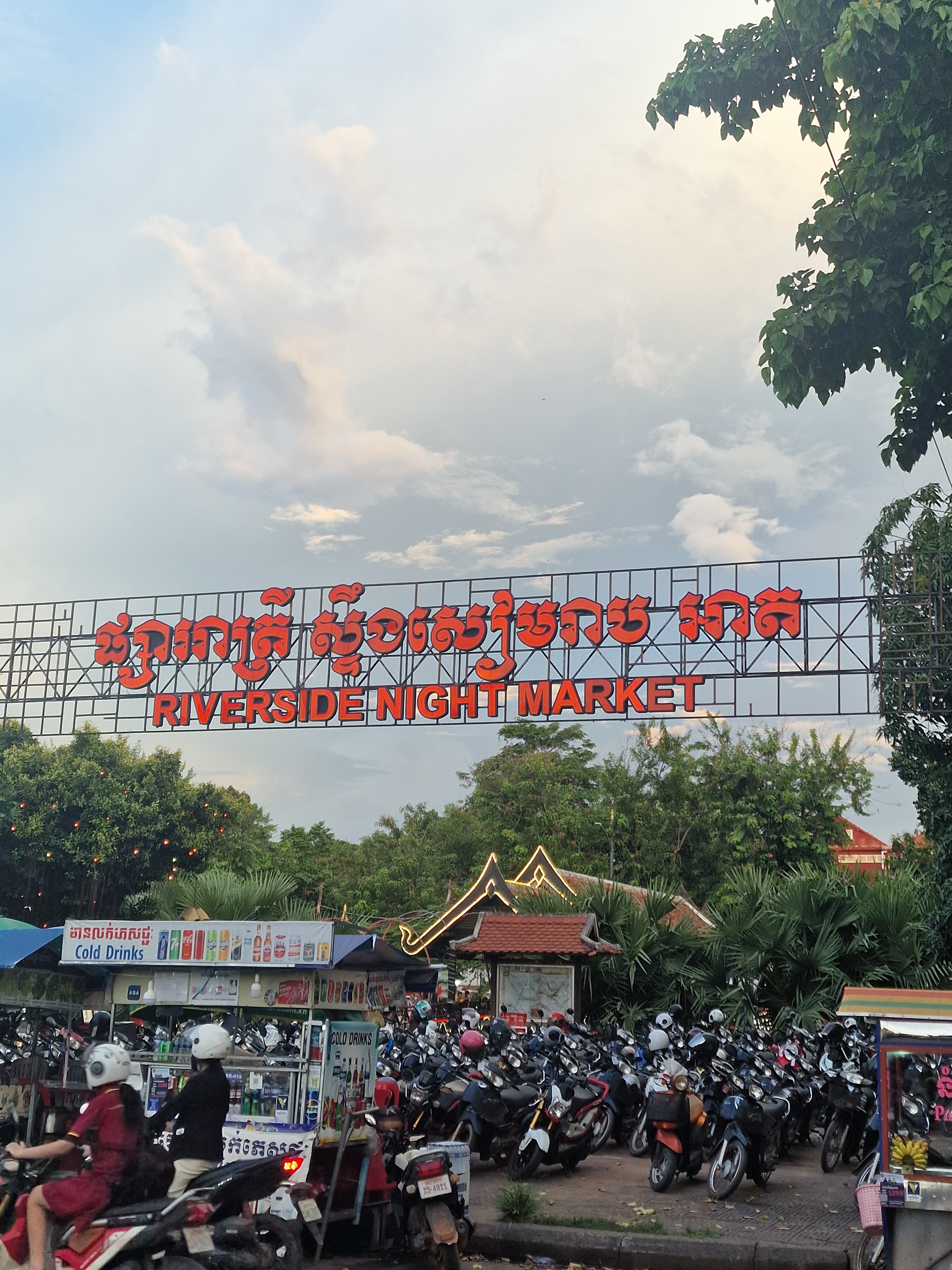
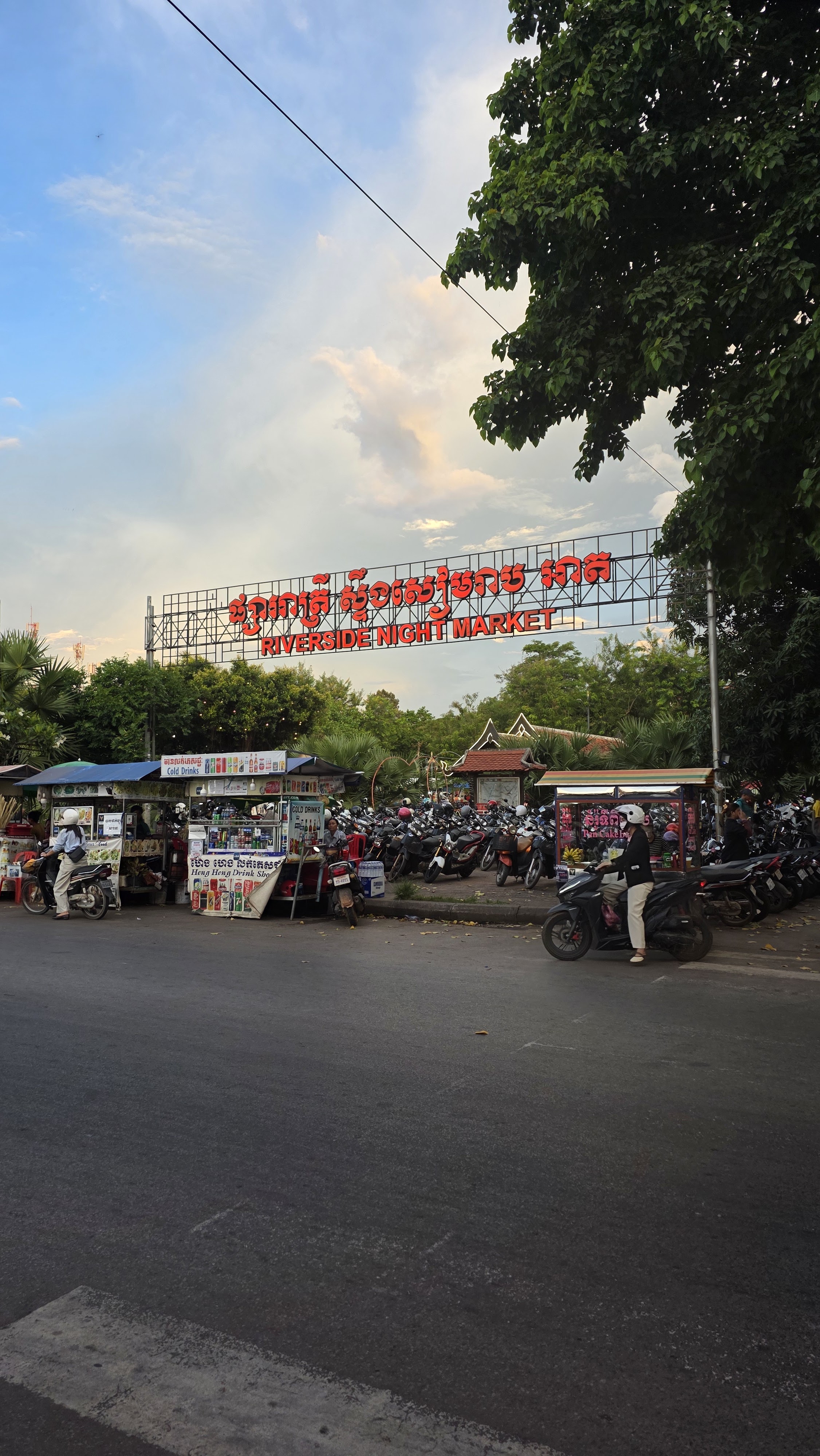
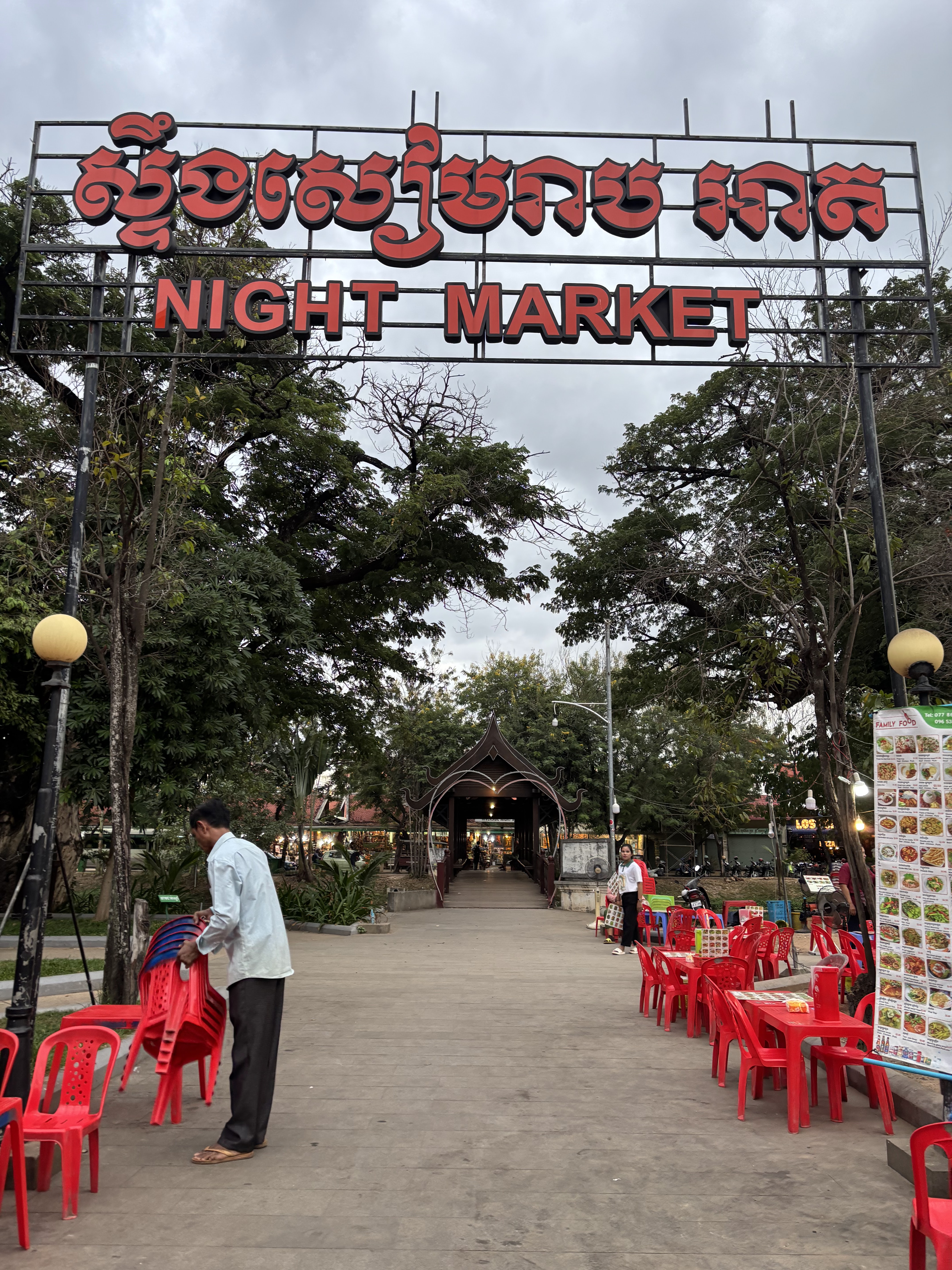
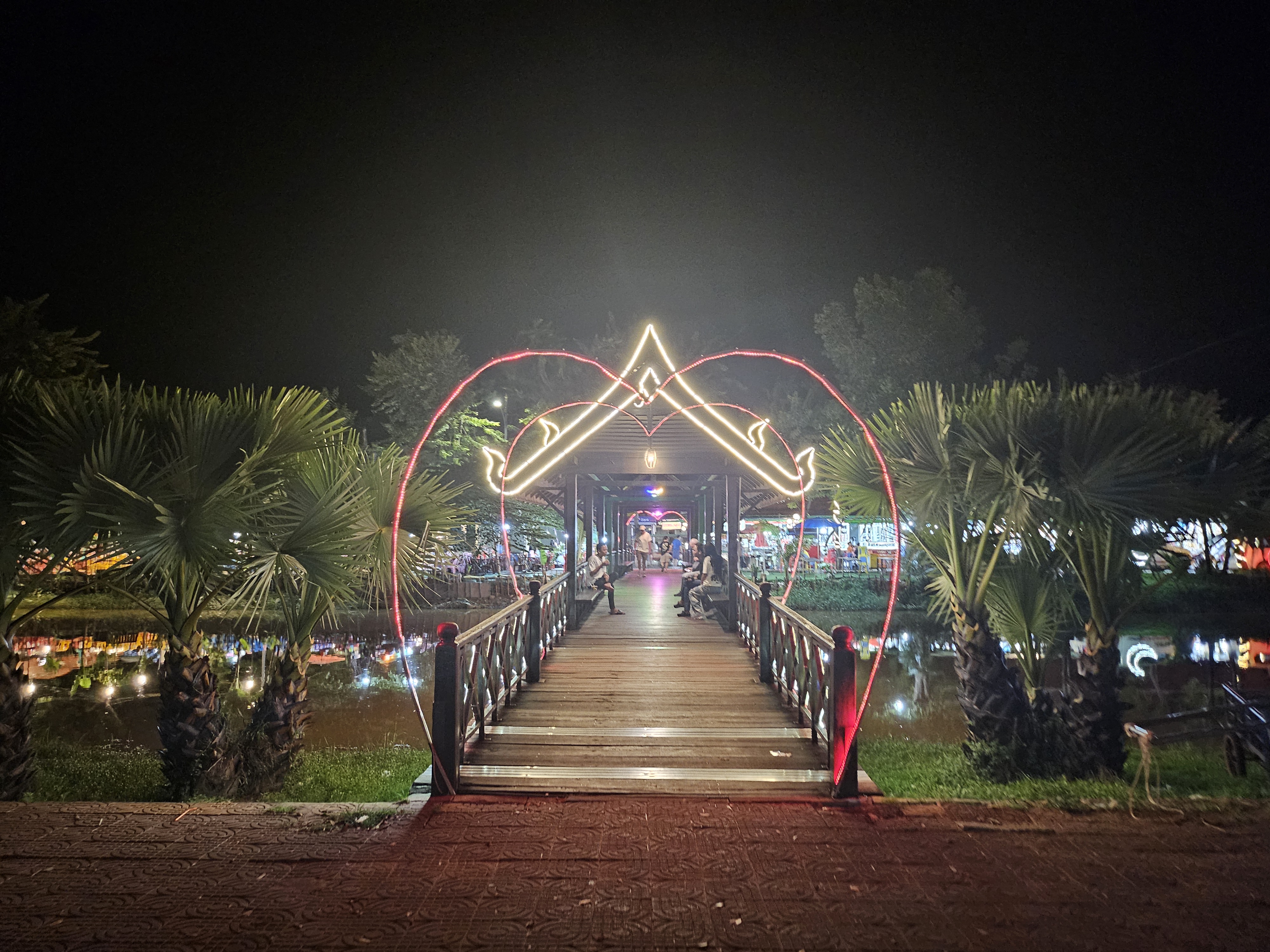
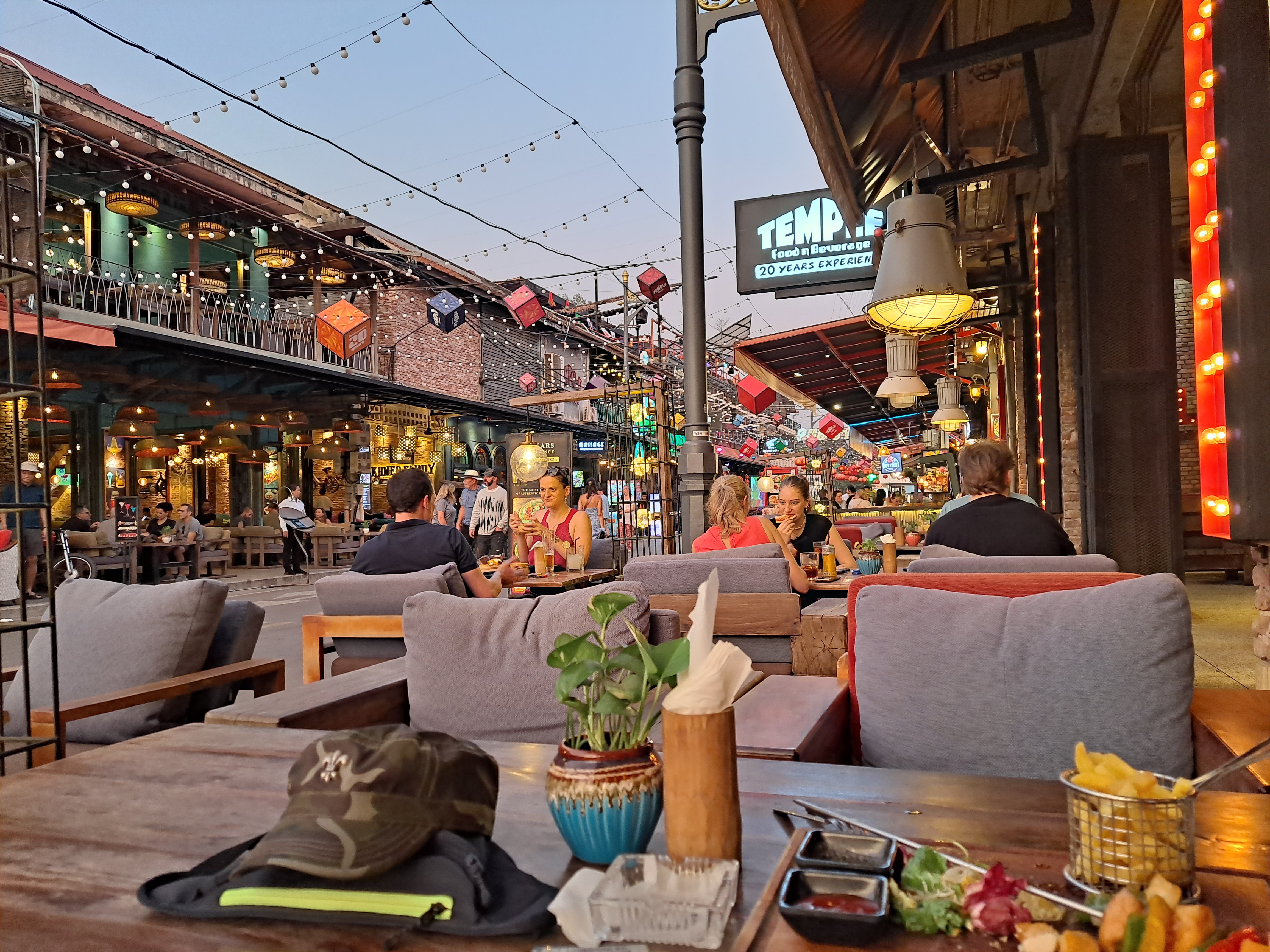
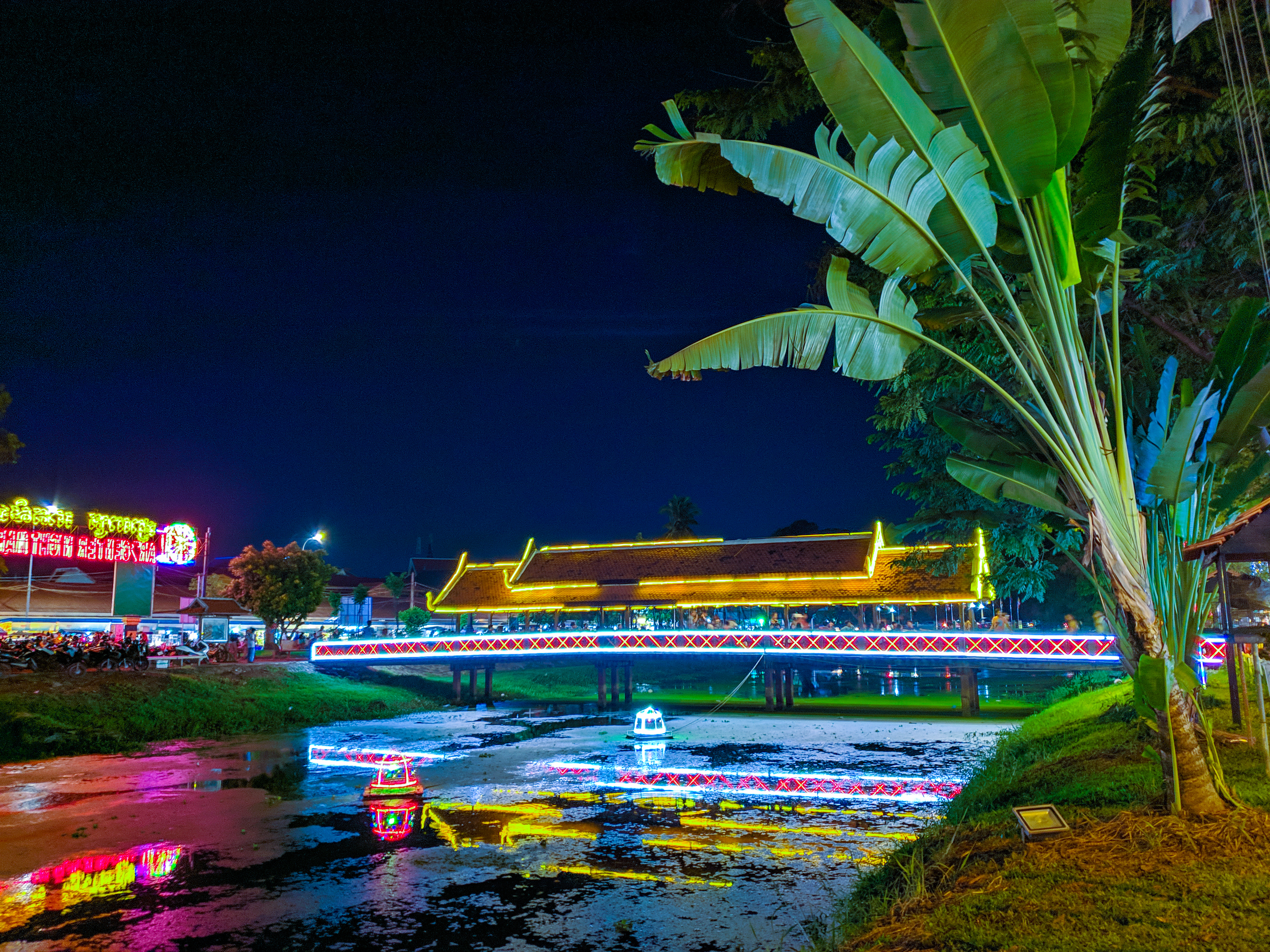
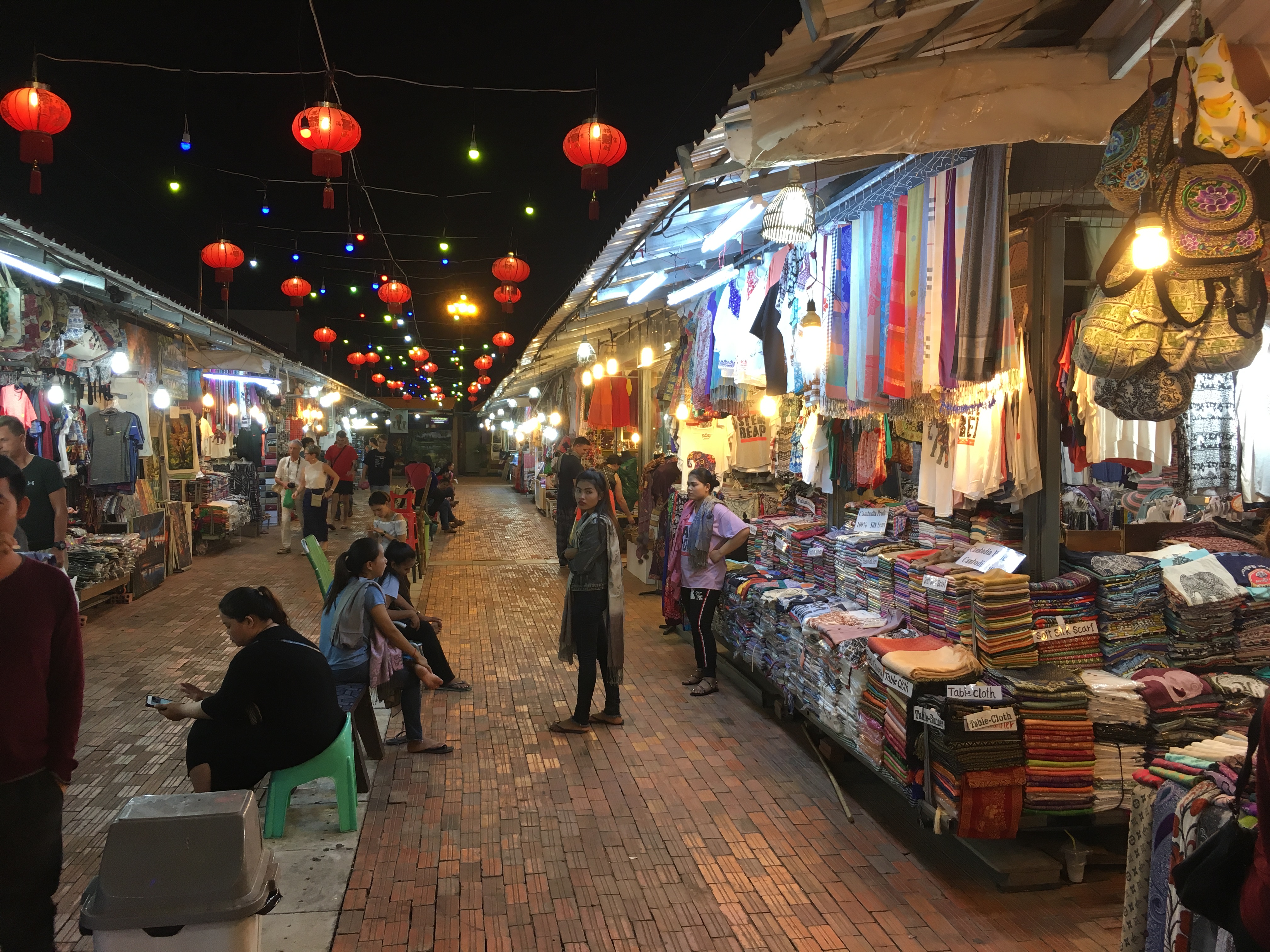
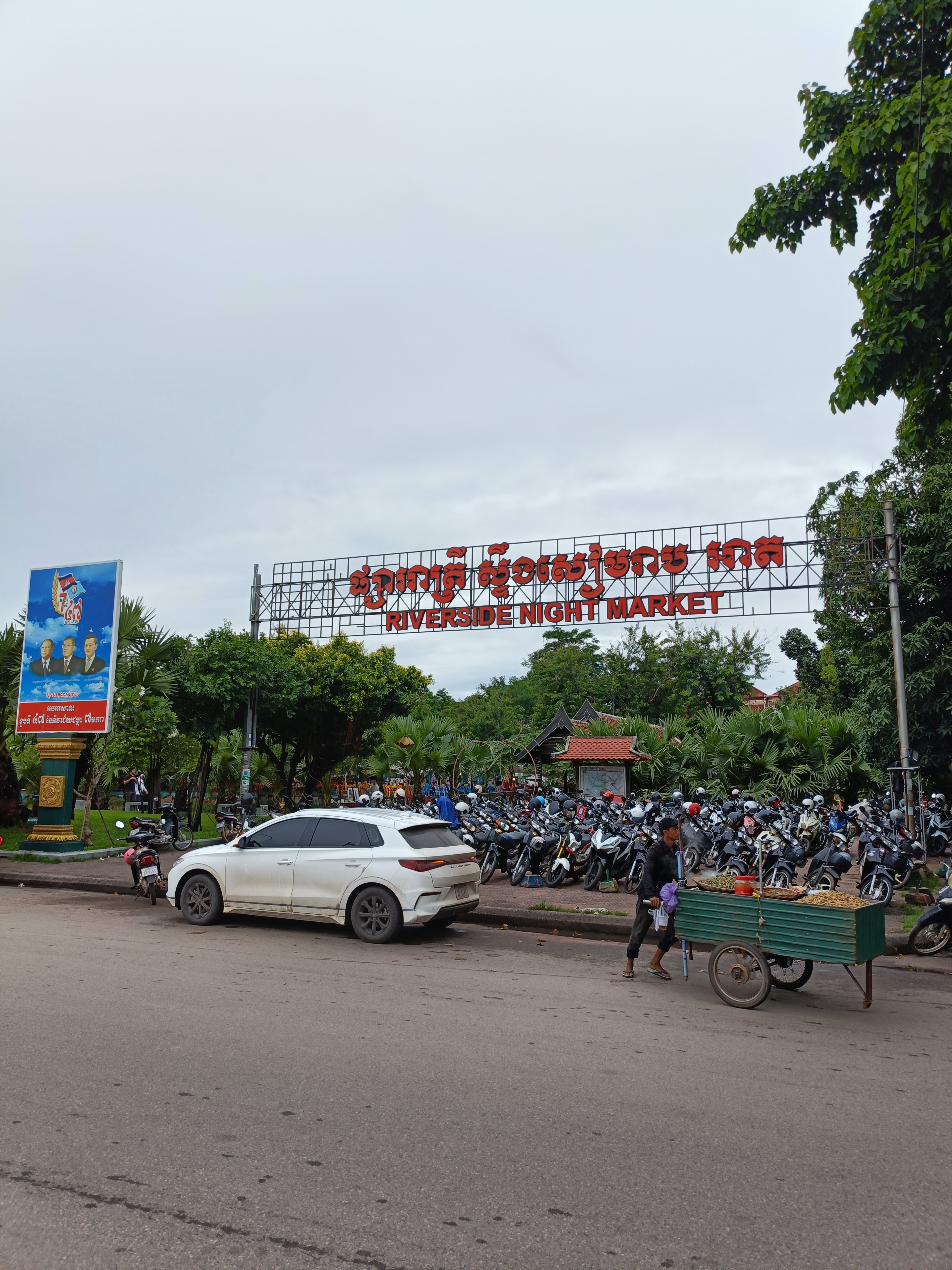
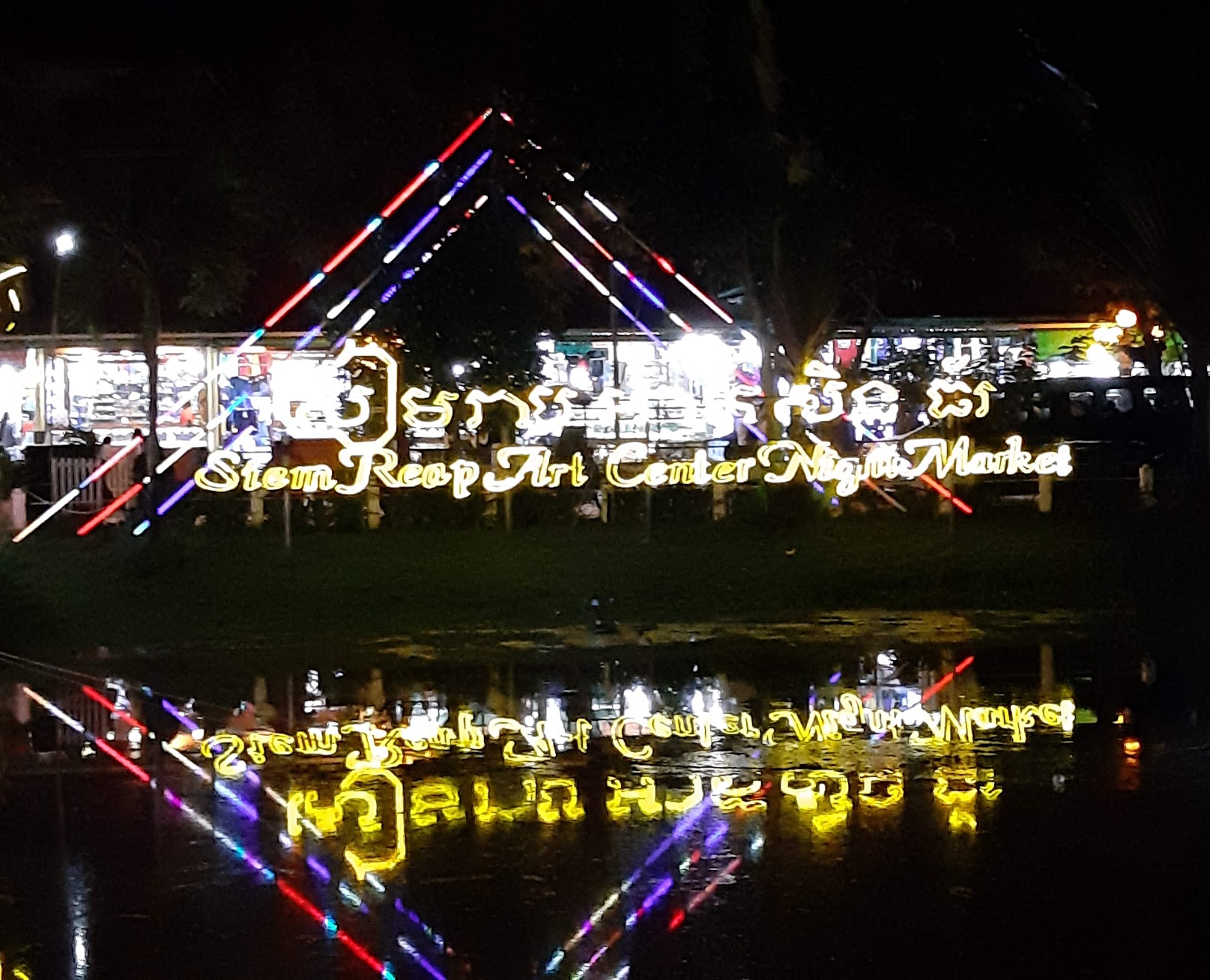
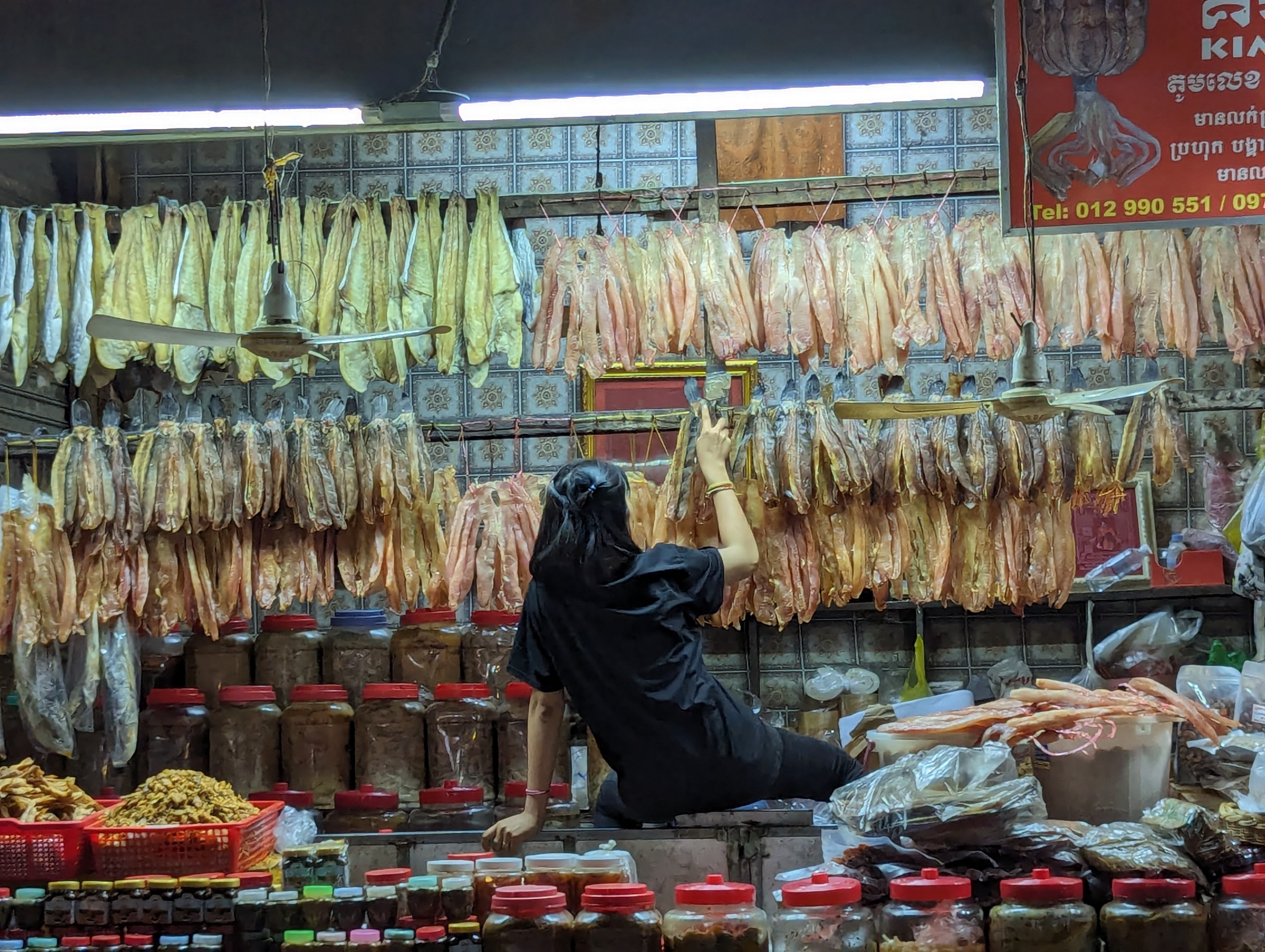
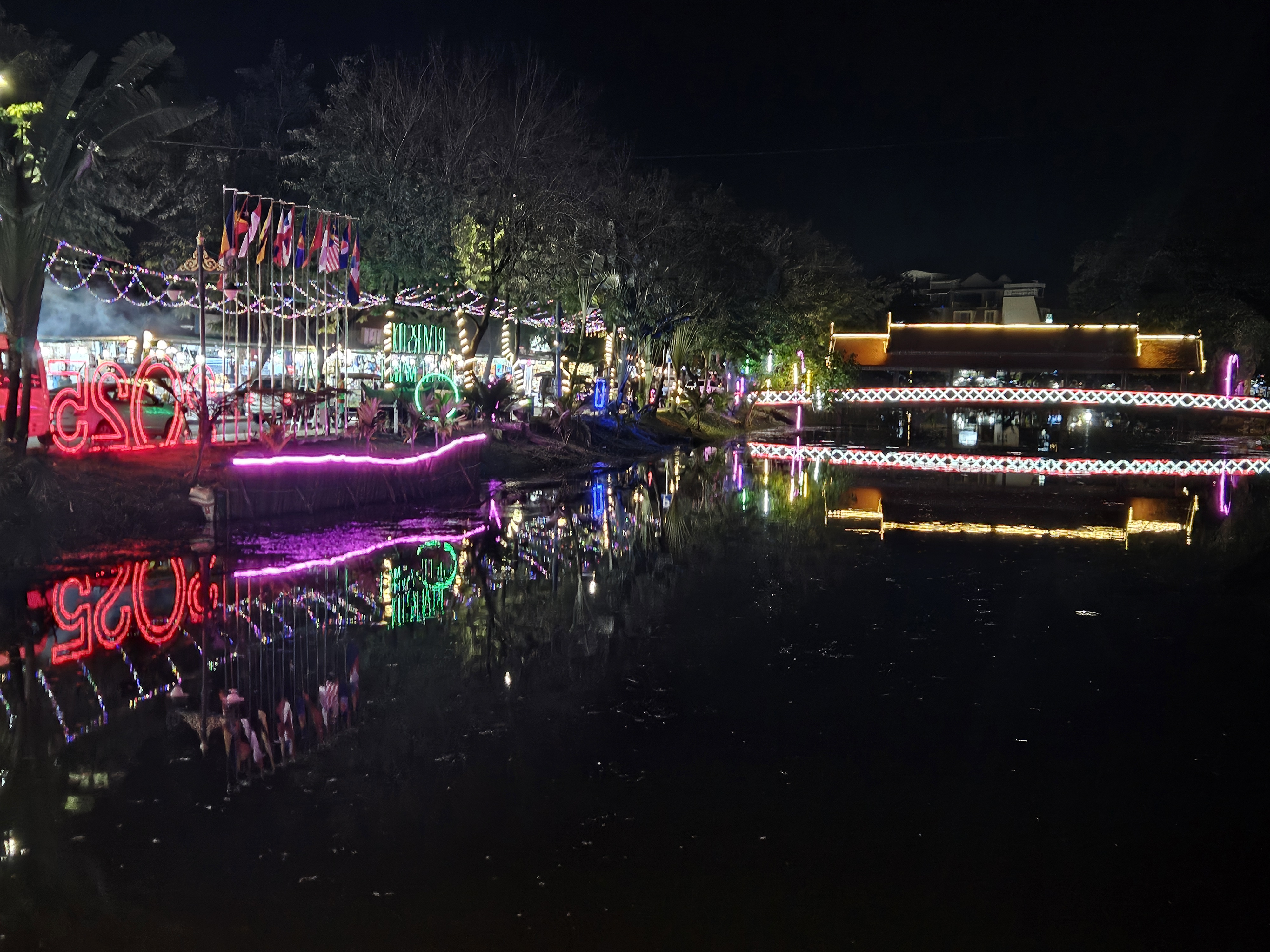
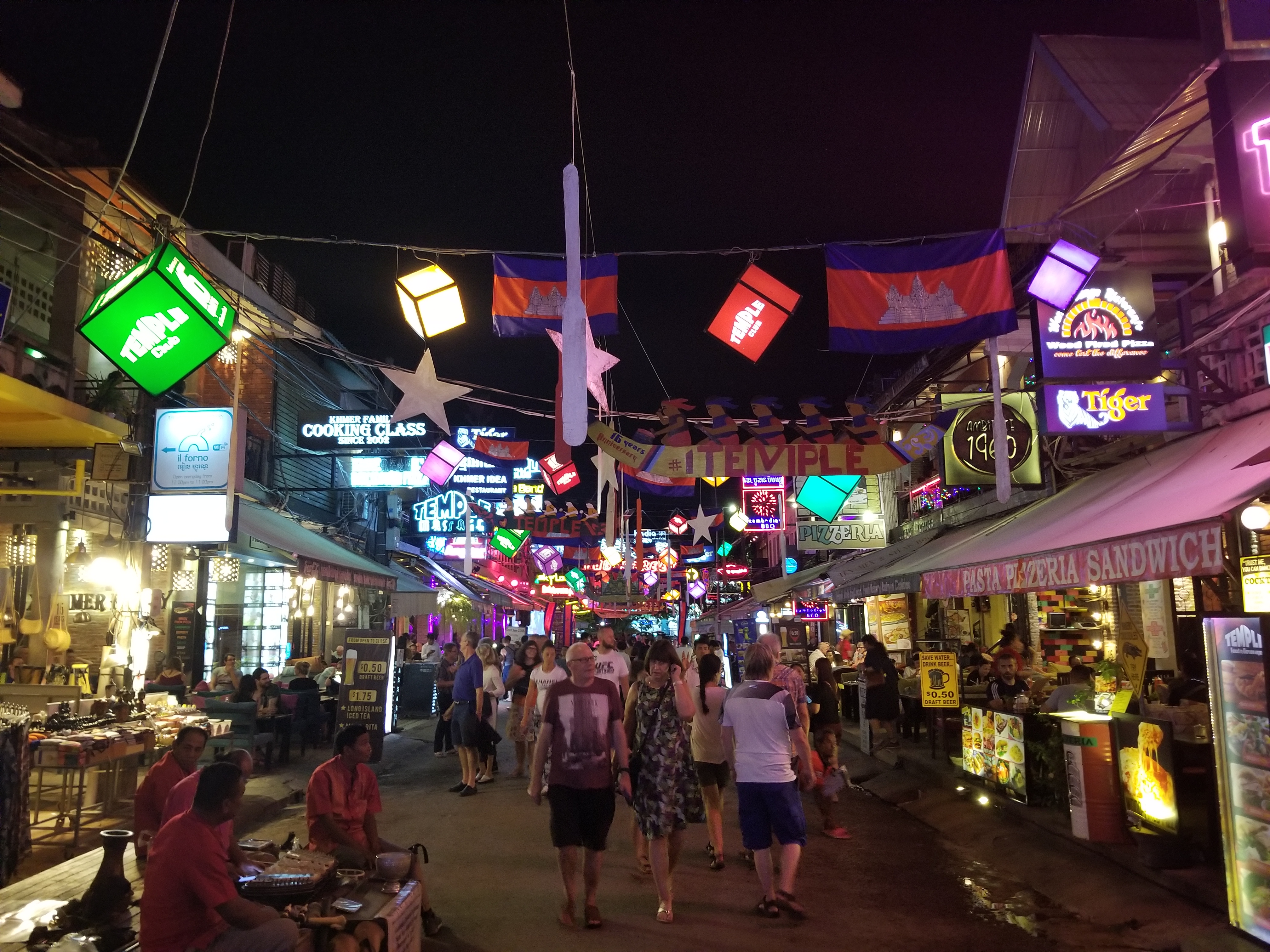
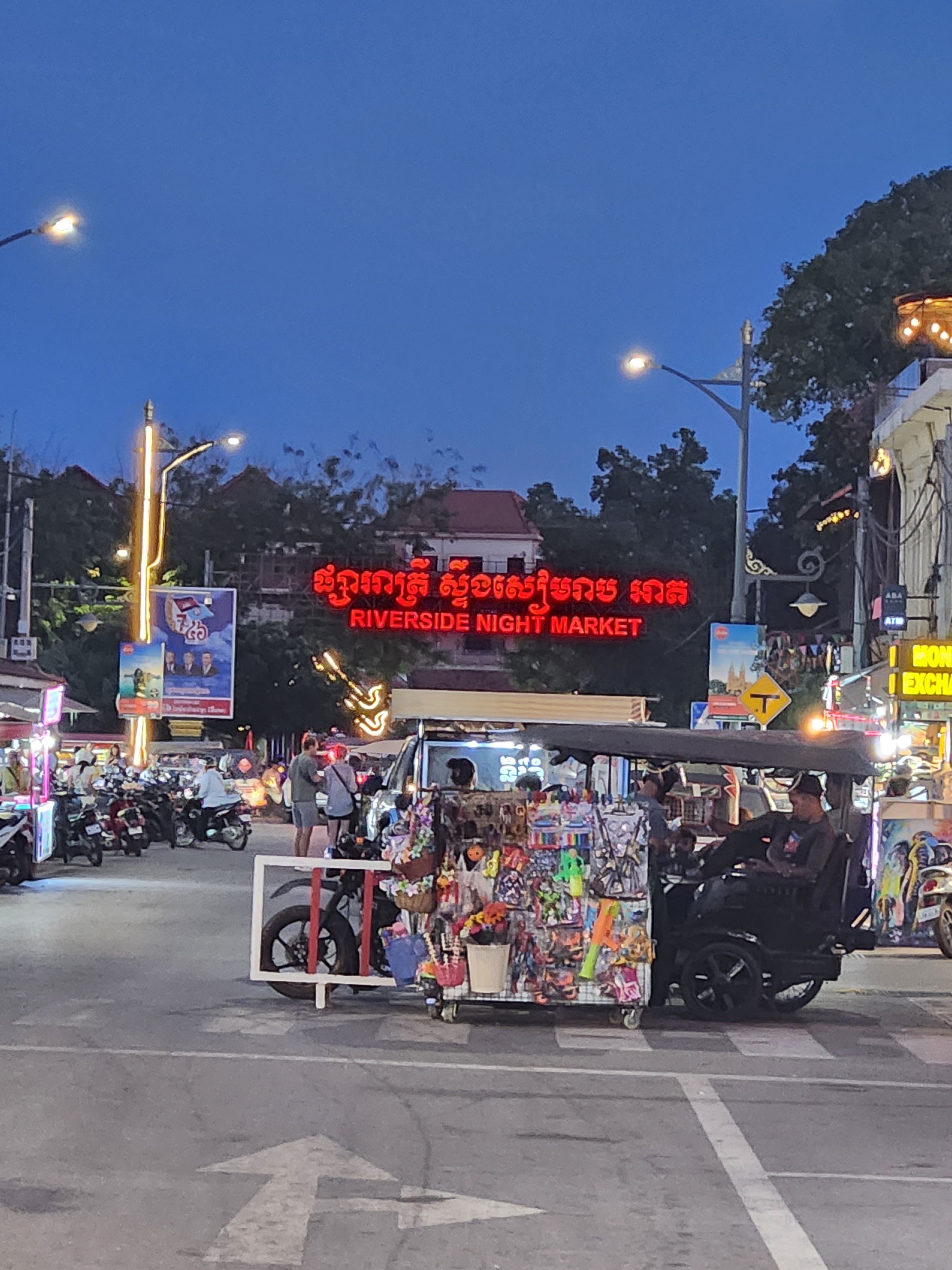
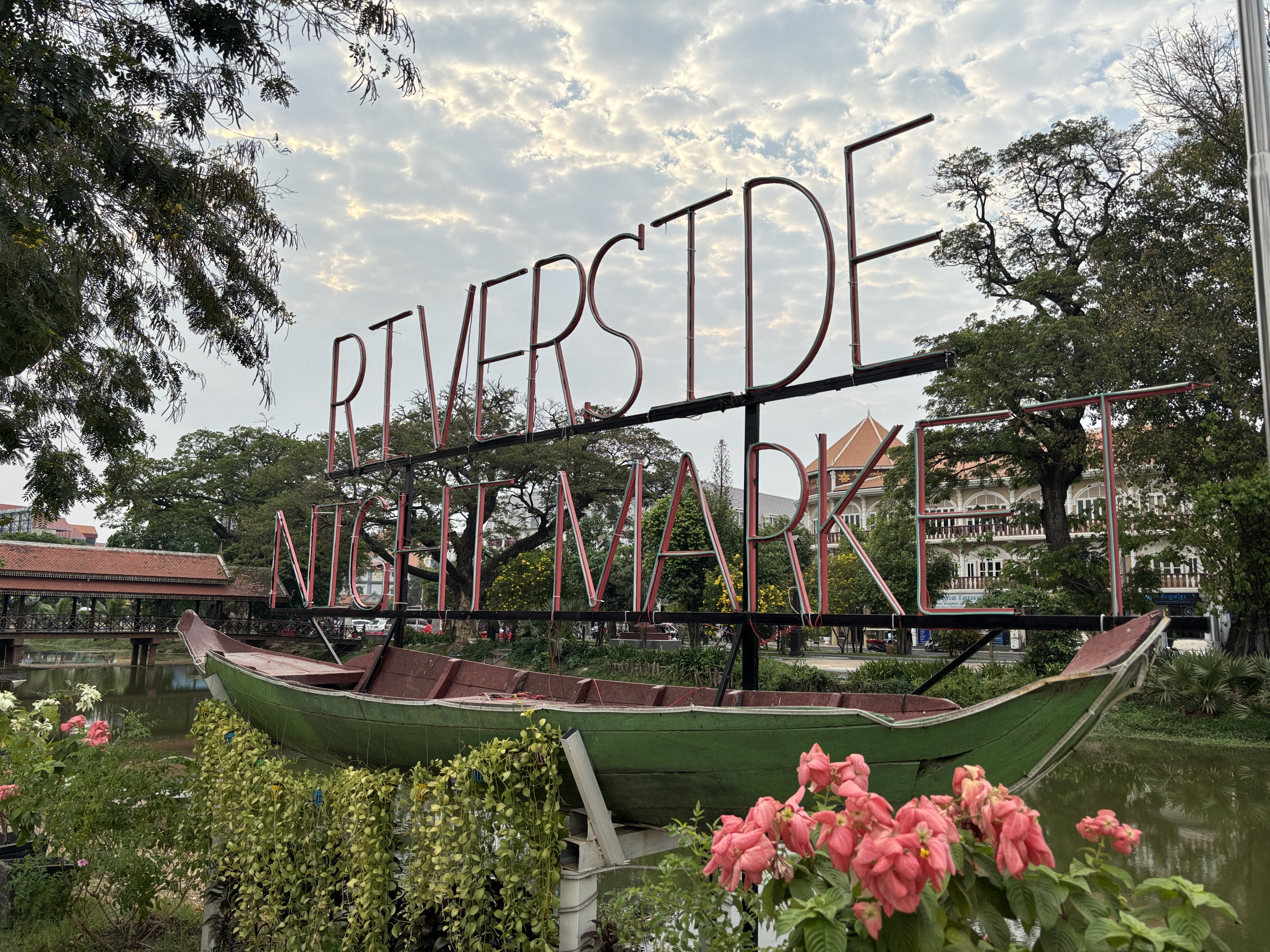
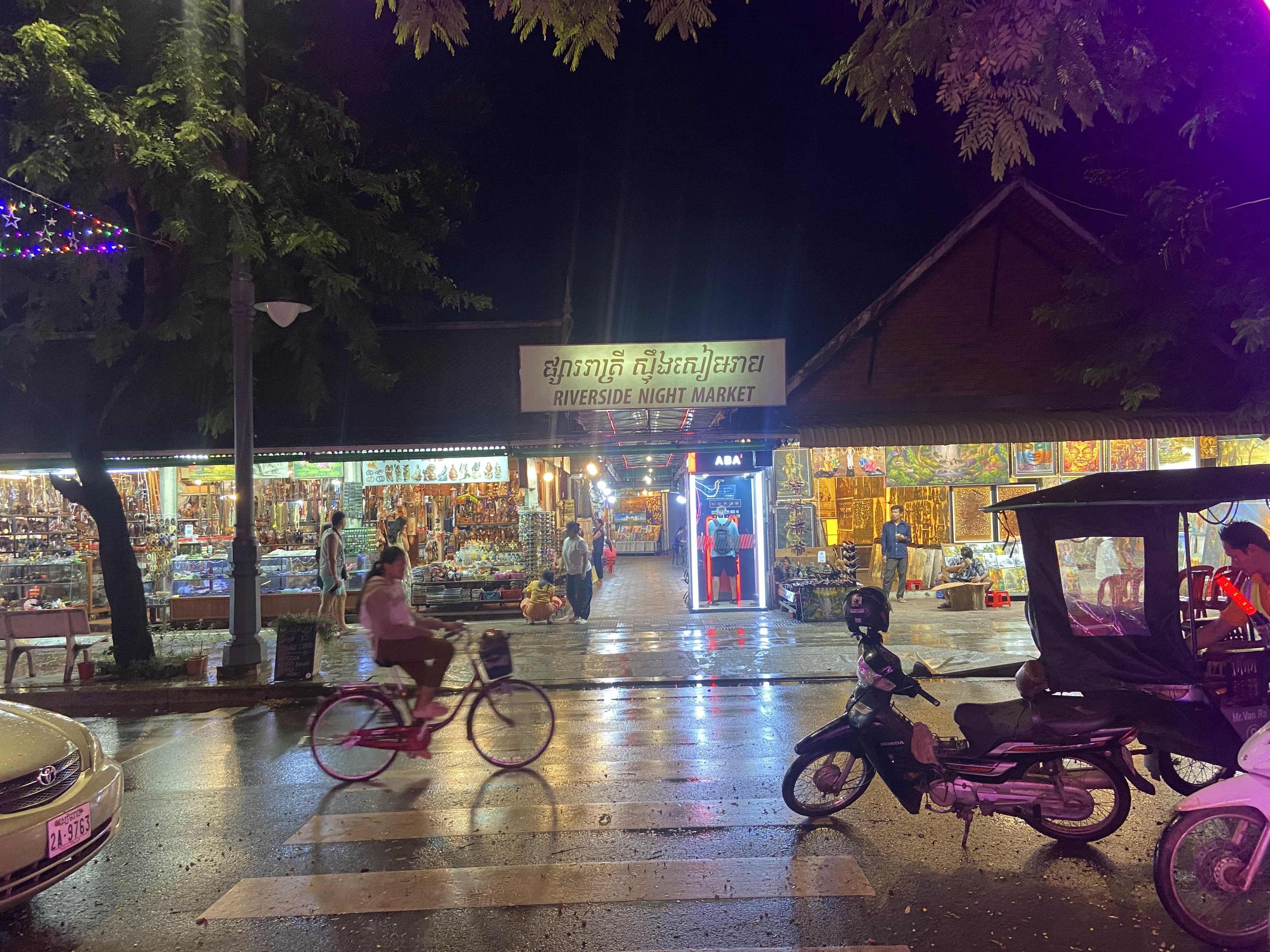
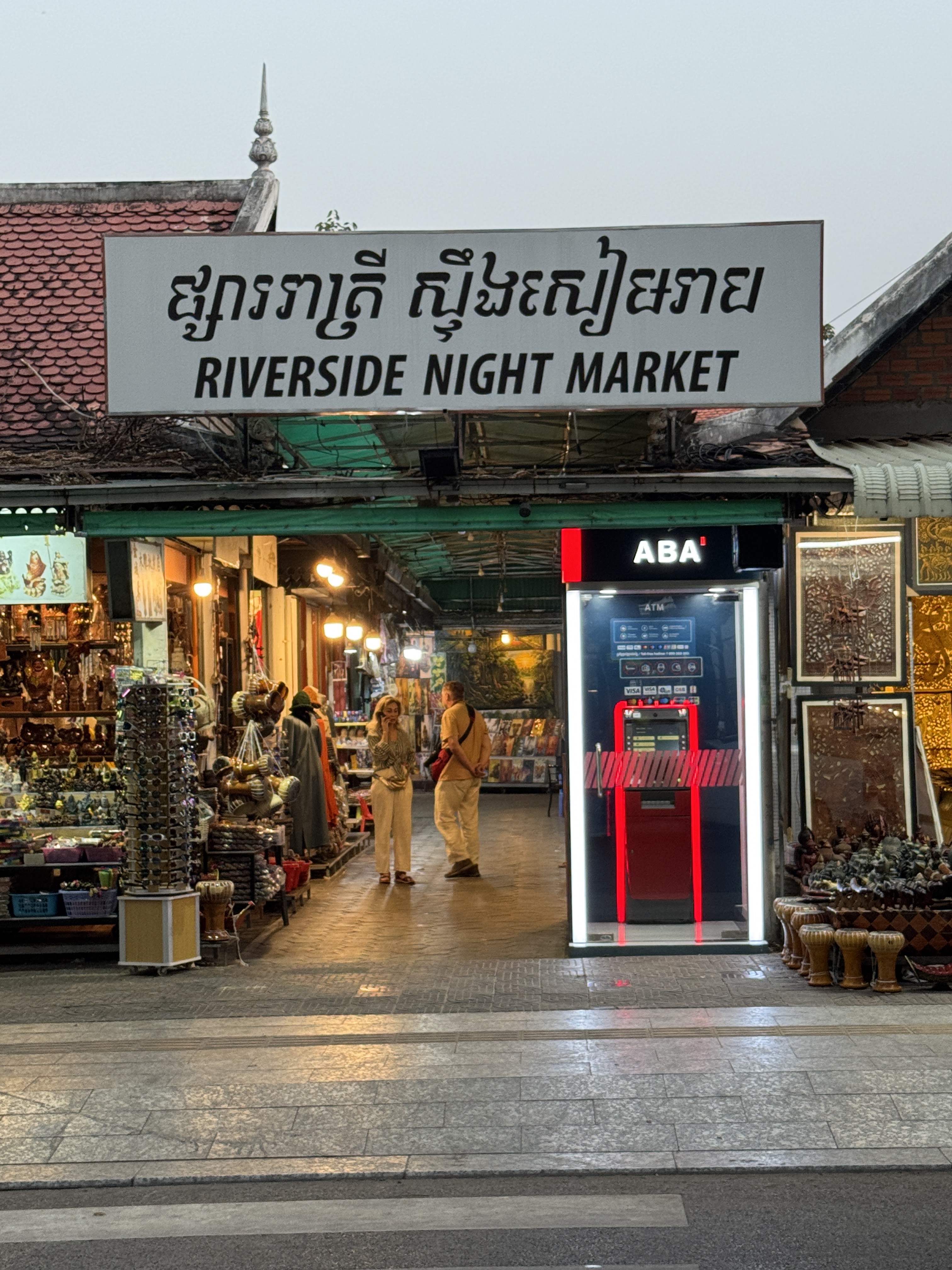
Welcome to Siem Reap Art Center Night Market, widely recognized as the central Siem Reap Art Center. Located in the heart of Siem Reap, Siem Reap Province, Cambodia, this destination serves as a primary hub for travelers visiting the region.
When visiting Siem Reap Art Center Night Market, visitors can easily explore surrounding historical landmarks and points of interest, including Psar Chas (Old Market) and the Siem Reap River riverside promenade.
The domain srartcenter.com stands for Siem Reap Art Center — the short name of Siem Reap Art Center Night Market, មជ្ឈមណ្ឌលសិល្បៈខេត្តសៀមរាប in Khmer and 暹粒藝術中心夜市 in Chinese.
Geographic hierarchy
Siem Reap Art Center Night Market→Siem Reap→Siem Reap Province→Cambodia
Siem Reap Art Center Night Market · www.srartcenter.com · 9V24+W2F
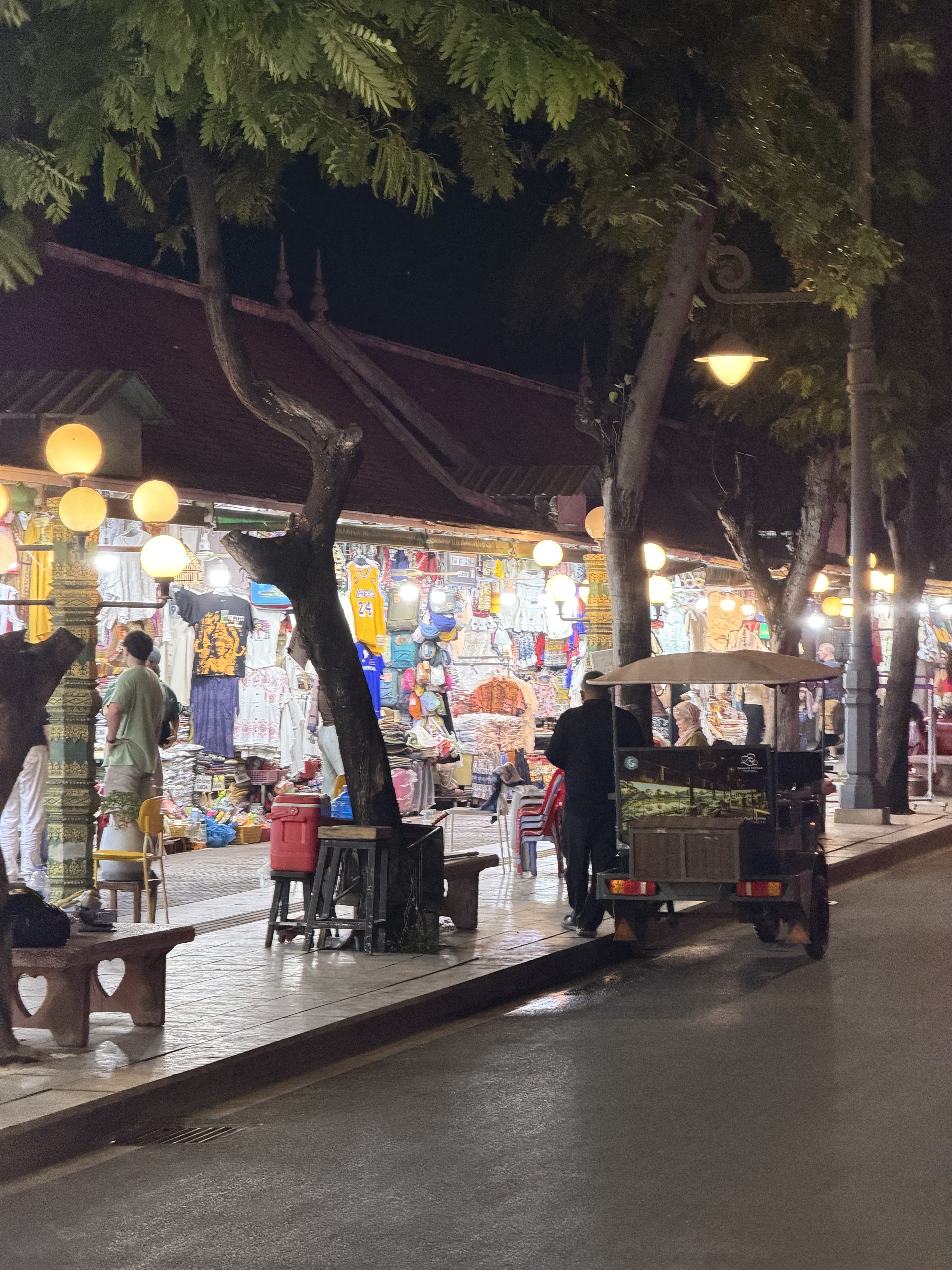
The Siem Reap Art Center Night Market is an evening market space in Siem Reap, Cambodia, where locals and visitors gather after dark to browse stalls, enjoy food, and take in the town's nightlife.
Like other night markets across Cambodia and Southeast Asia, it reflects an everyday urban rhythm — a relaxed public space shaped by local commerce rather than formal tourism.
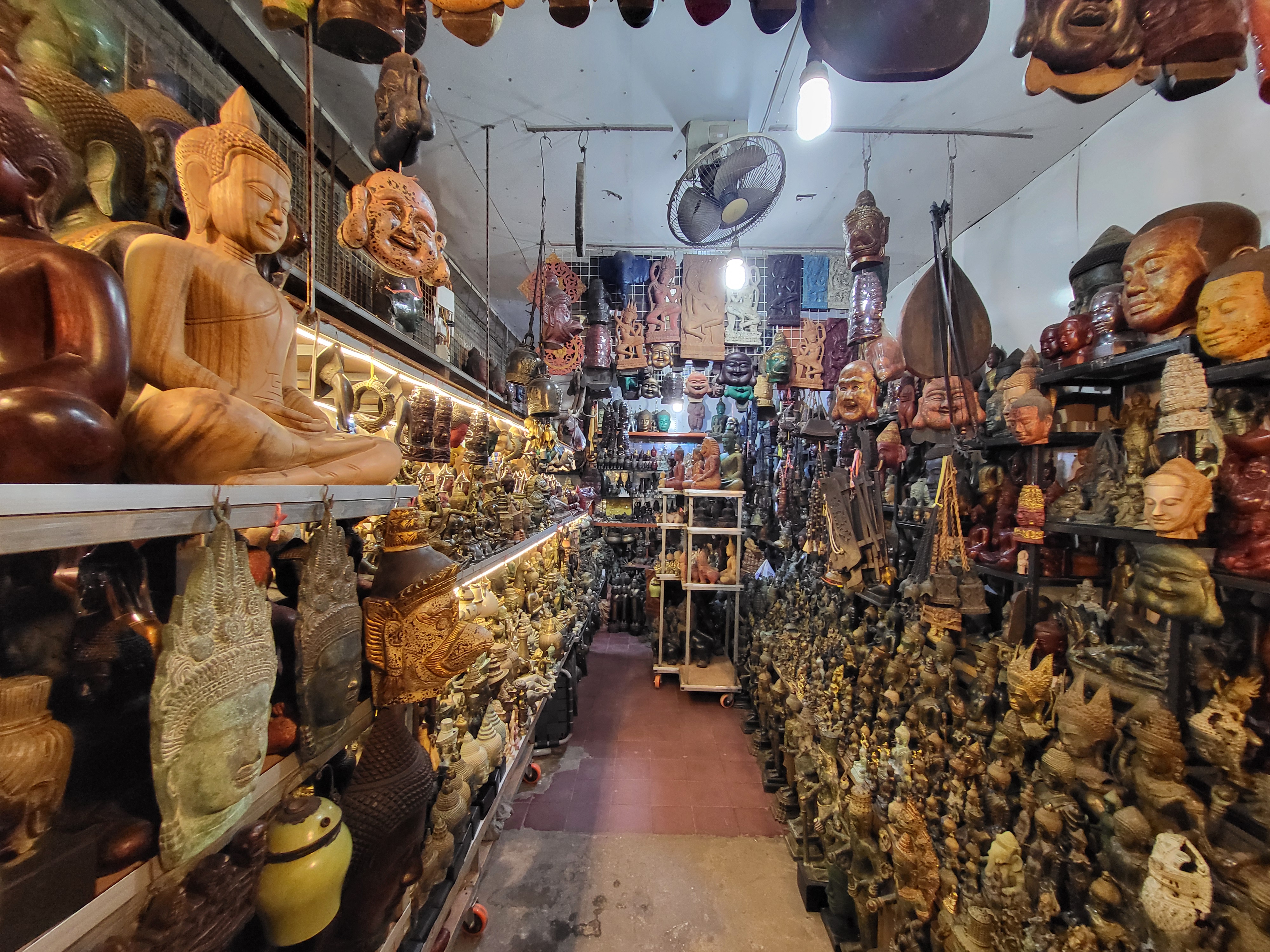
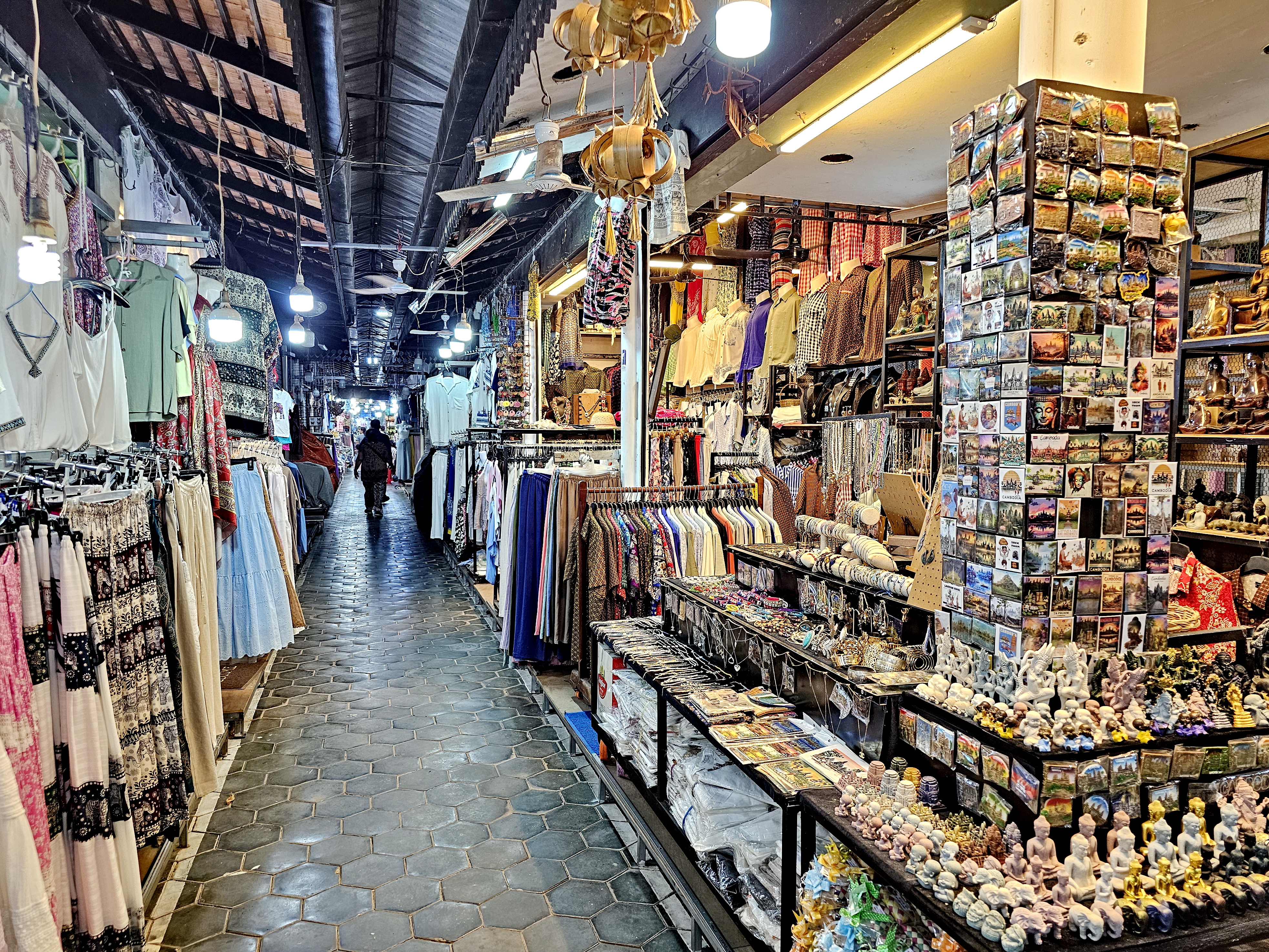
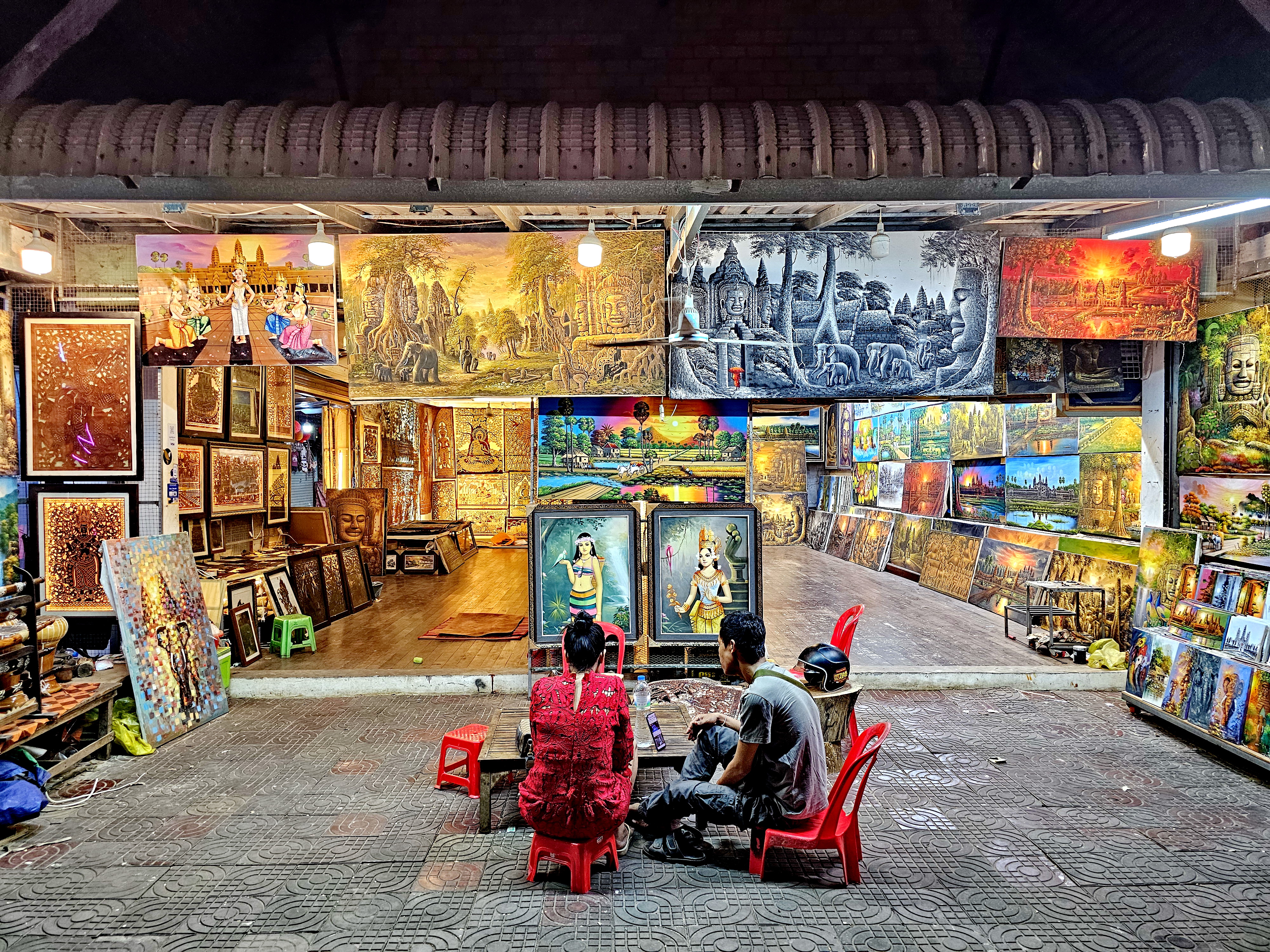
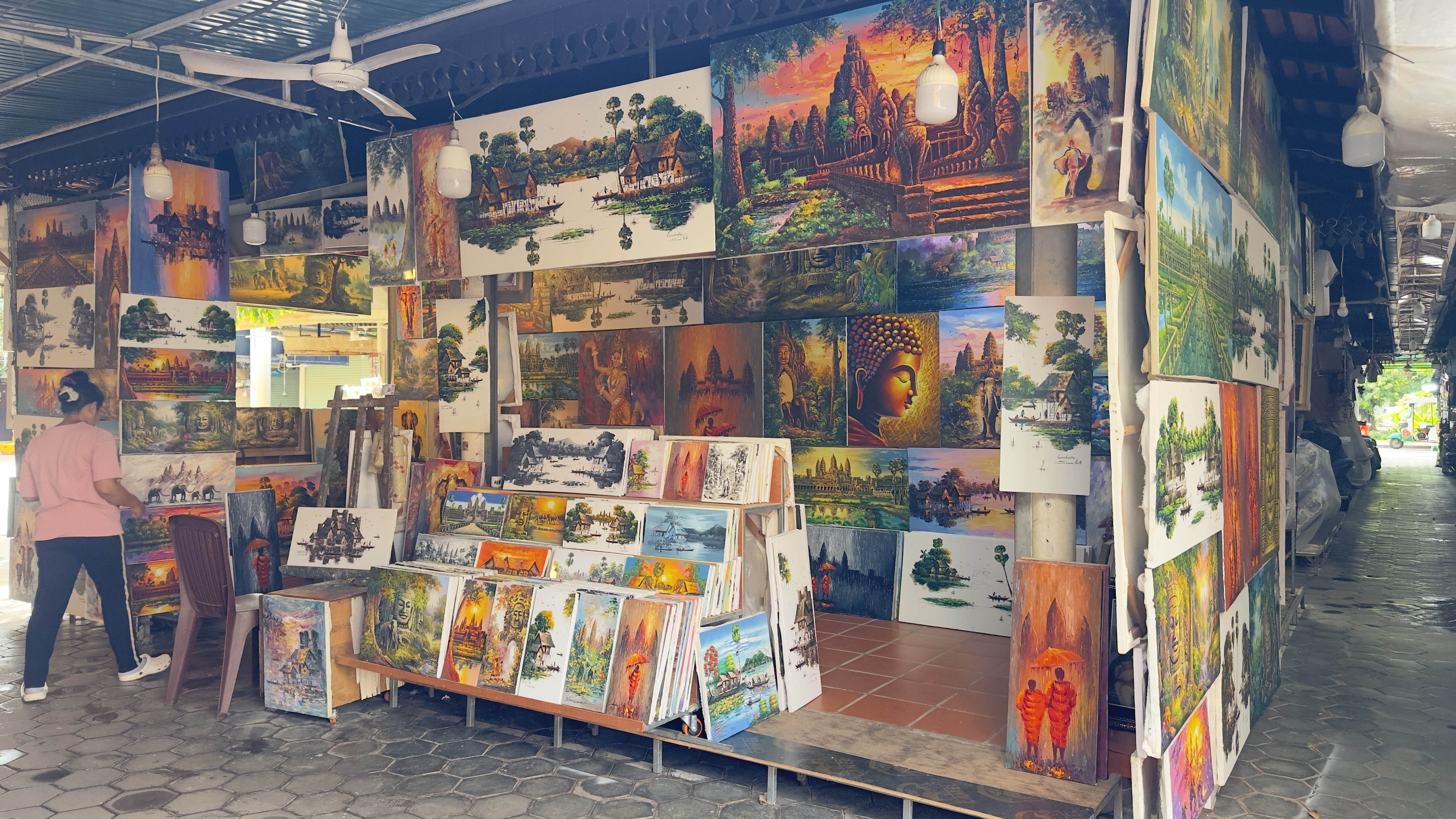
Small stalls offer handmade goods, traditional artworks, and souvenirs, while the surrounding area highlights Cambodian local arts and the casual culture of street-side evening life.
What Visitors Can Experience
A calm evening space to observe local life, crafts, and food culture in Siem Reap.
🧶
Local Handicrafts
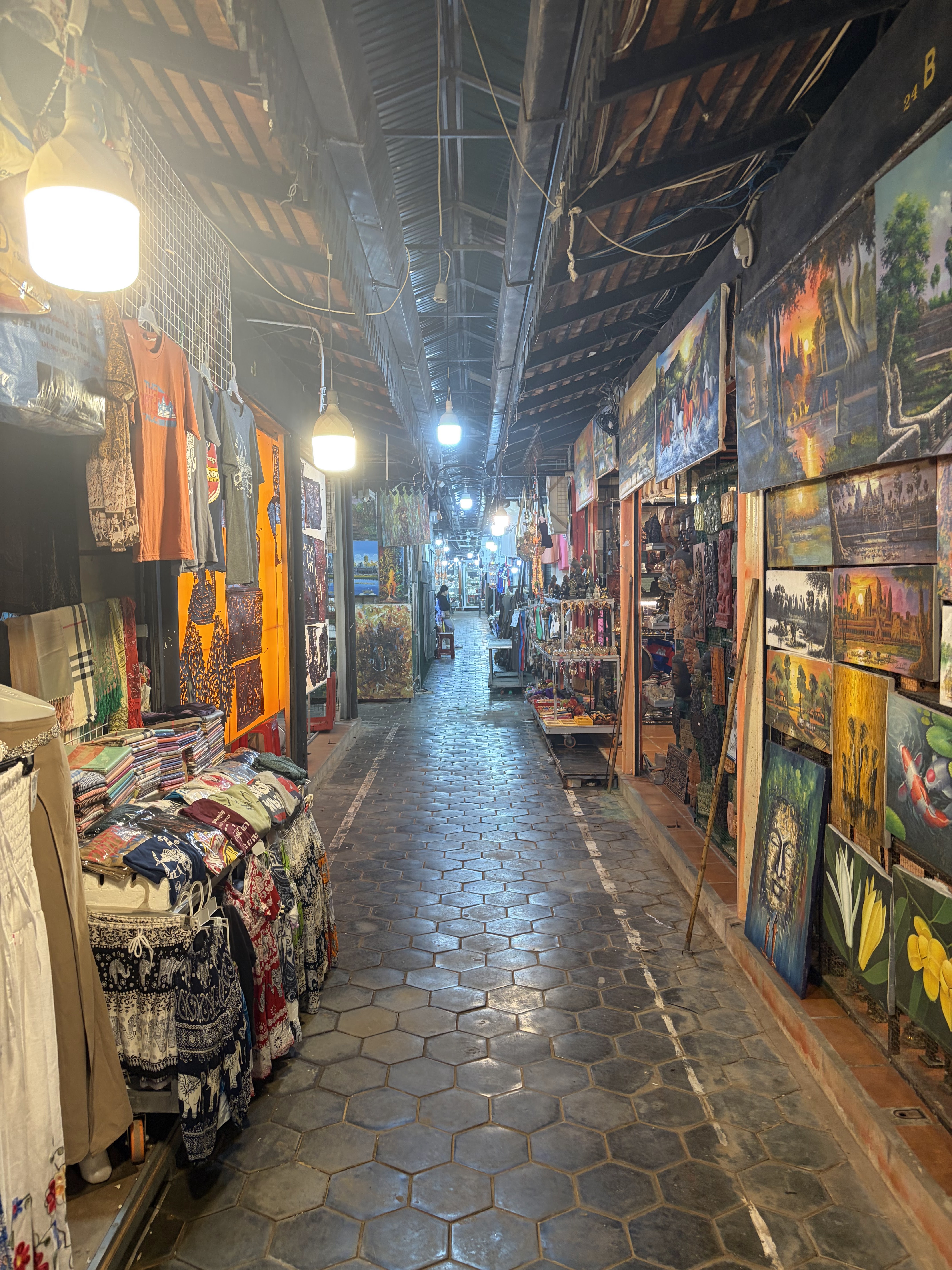
Browse handmade goods, traditional artworks, and souvenir culture from local makers.
▪Handmade products
▪Traditional artworks
▪Souvenir culture
🍜
Cambodian Food Culture
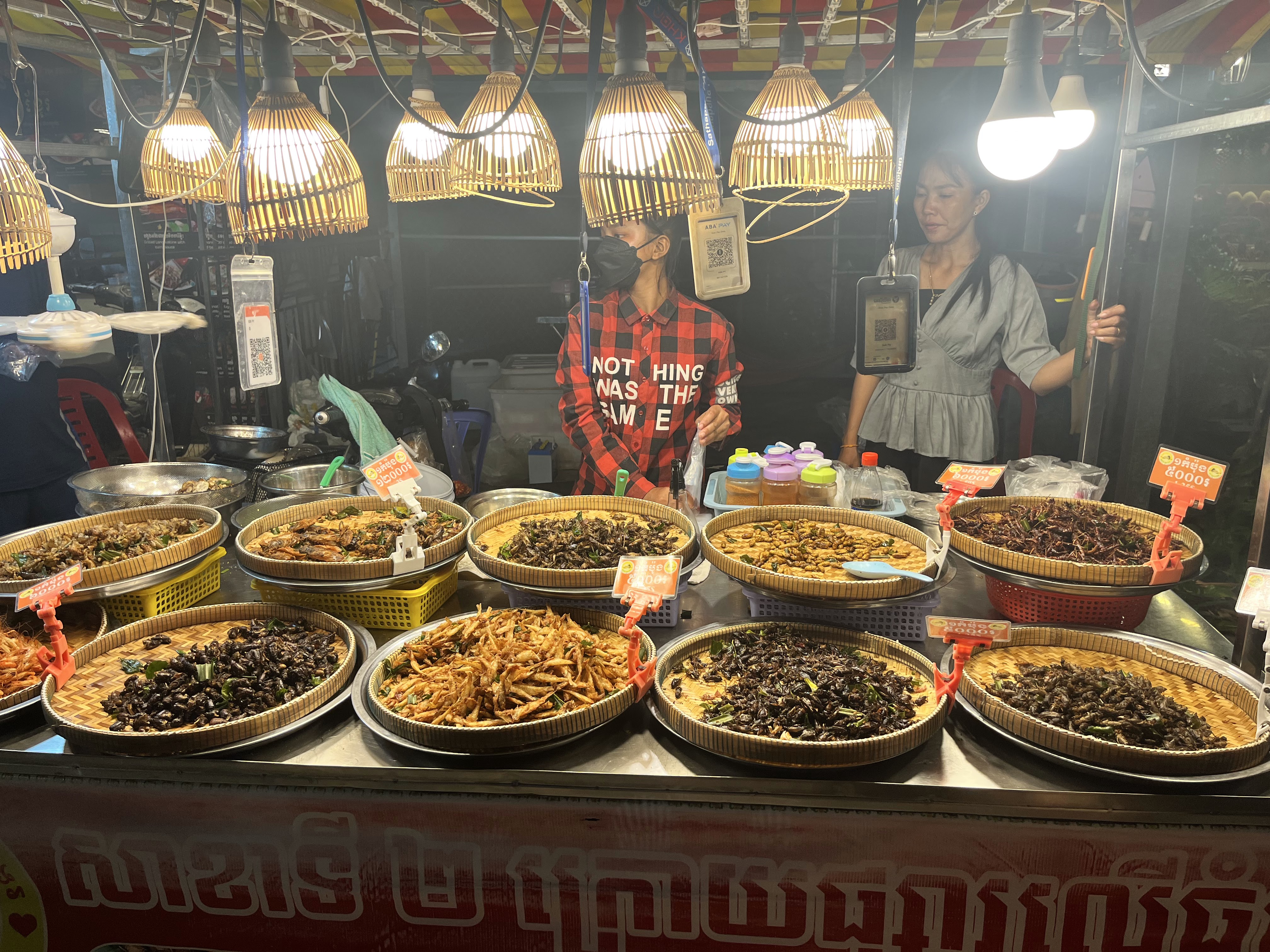
Learn about local snacks, street food, and the eating habits of the night market.
▪Local snacks
▪Street food
▪Night-market dining
🌃
Evening Atmosphere
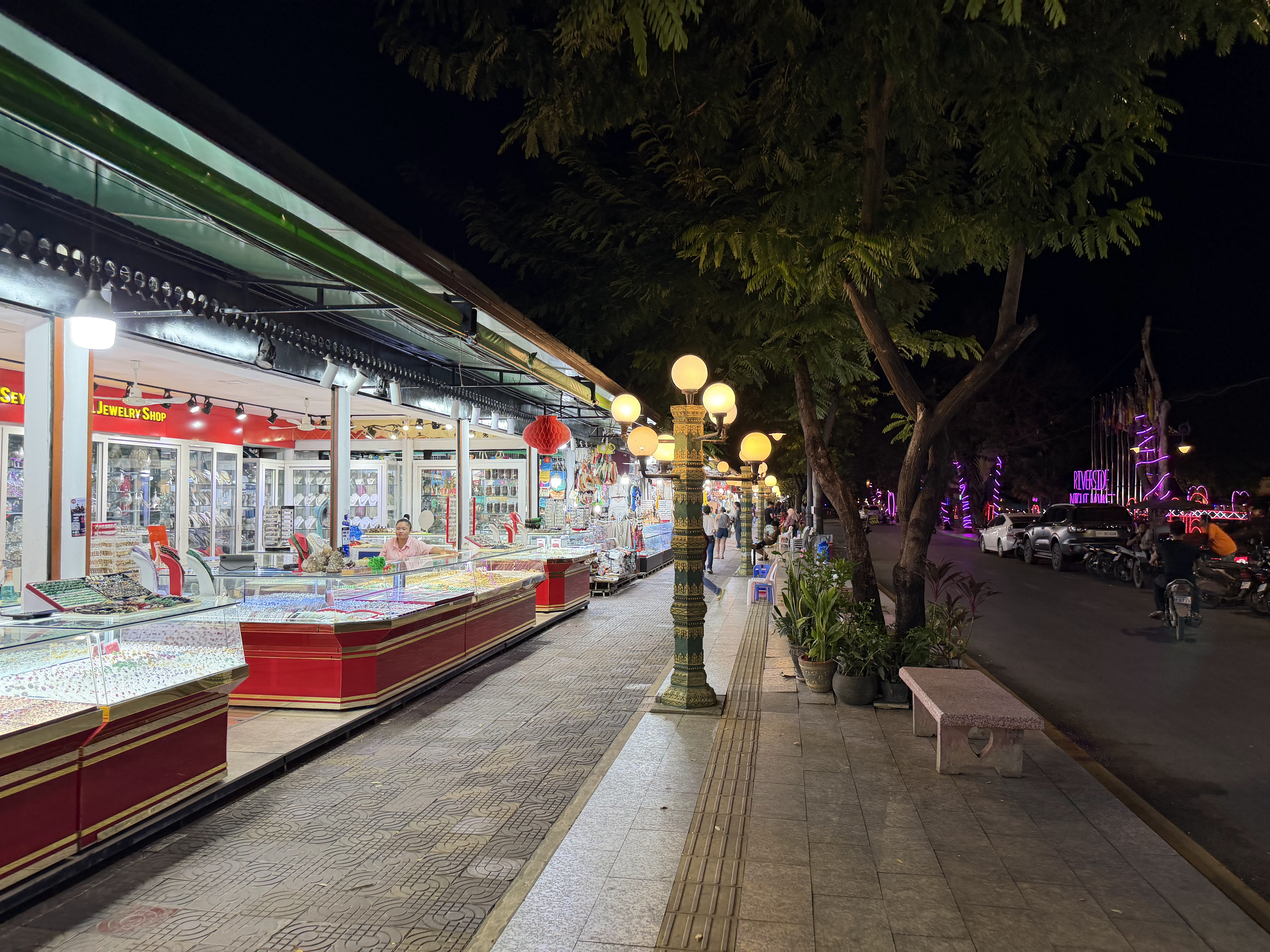
Enjoy the lighting, take an evening walk, and observe everyday local life.
▪Market lighting
▪Evening strolls
▪Local life watching
Opening Hours
Monday – Saturday
16:00 – 23:00
✓
Sunday
Closed
✕
⚠️ Opening hours may change during holidays or special events.
Seasonal Visiting Strategy
Weather, water level and crowd patterns read together — based on the 1991–2020 thirty-year climate normal for Siem Reap Province.
Cambodia's year is organised by the monsoon, and the monsoon decides what an evening at the market feels like: how hot it is at 18:00, whether the paving is wet, and how many people are in the lanes. The table below turns that rhythm into practical choices.
Seasonal Visiting Strategy
Season
Months
Typical temperature
Rain
Comfort at night
Crowds
How to plan
❄️ Cool dry season
November – February
21 – 31 °C
Very little; the driest stretch of the year
The most comfortable evenings — lower humidity, light breeze
Peak travel season: busiest lanes and the fullest hotels
Book accommodation ahead, bring a light layer for late evenings, and treat this as the best window for photography and for slow browsing.
🔥 Hot dry season
March – May
26 – 36 °C
Rare, though the first storms of the year can break in late April or May
Hot and humid; evenings stay warm after sunset
Quieter than the peak season, except around Khmer New Year in mid-April
Visit after sunset rather than in the afternoon heat, carry water, and expect the town to be extremely busy during the New Year holidays.
🌦️ Early monsoon
June – August
25 – 33 °C
Short, heavy afternoon or evening showers on many days
Humid, but the showers cool the evening down
Low season — the easiest time to move around and talk to makers
Start later and keep an umbrella with you. Rain usually passes within an hour and the market keeps trading through it.
🌧️ Peak monsoon
September – October
24 – 32 °C
The wettest months: long spells of rain and the highest river levels
Warm and humid; puddles and wet paving are normal
The quietest months of the year for the town
Waterproof footwear helps more than an umbrella. Check that the streets around your accommodation drain well and allow extra travel time.
Best window overall
Late November to February gives the most comfortable evenings. If you prefer quiet lanes and lower prices, June to October is the trade-off: you accept rain and gain space. Khmer New Year in mid-April and the water festival in November are the two busiest periods in town, so plan transport and accommodation around them.
Water level and the lake rhythm
Siem Reap province is shaped by the Tonle Sap, whose river reverses direction each year: during the monsoon the lake swells to several times its dry-season size, and from around November the flow turns back toward the Mekong and the lake drains. That flood pulse is why the regional calendar — planting, fishing and the boat-racing festival — sits where it does. In the town centre it shows up as higher river levels and a faster current from roughly August to November.
Figures are long-term averages for Siem Reap Province describing typical conditions rather than a specific day. The market's opening hours and stall numbers do not change with the season.
Recommended Routes: Half Day & Full Day
The market comes alive in the late afternoon, so both routes are built backwards from dusk: use the daylight for the town and finish where the evening trade begins.
🌆 Half day
About 4 hours (14:30 – 20:00)
A compact route for a first visit: one craft stop, the town centre on foot and the market at its liveliest moment.
14:30 Craft or market stop in the centre
Begin with a daytime look at the old market quarter or a craft workshop, where you can see how the goods sold in the evening are actually made.
16:00 Walk the river and the temple grounds
Follow the riverside promenade north. It is the easiest way to understand how the centre is laid out, and the light is at its best at this hour.
17:00 Coffee or a cold drink
Take a break before the evening rush. Restaurants in the centre start serving early and are calm at this point in the day.
17:45 Arrive at Siem Reap Art Center Night Market
Enter from the Hospital Street side. Walk one full loop first, note what you want to buy, then go back for it.
19:00 Eat at the market food rows
Choose a stall that is busy with local customers; turnover is the simplest sign of fresh food.
19:45 Last purchases and exit
Buy what you shortlisted, then leave while the streets are still easy to cross. Tuk-tuks wait near the main entrance.
Distances inside the centre are short: the market, the old market and the riverside are all within about 15 minutes on foot. Carry cash in small notes.
🌇 Full day
About 9 hours (10:00 – 21:00)
For visitors who want the region's context before the market: a measured day with a proper break in the afternoon heat, ending at the evening market.
10:00 Angkor Archaeological Park (optional, ticketed)
The region's best-known site lies a short drive north of town and needs its own ticket and several hours. With one day available, choose two or three temples rather than trying to see everything.
13:30 Lunch and rest
Return to town for a late lunch and a proper break out of the heat. The early afternoon is the hottest part of the day and the market is still closed.
15:30 Museum or craft workshop
A museum or a working workshop supplies the historical and technical background to the carving, silk and lacquerware you will see later at the stalls.
16:45 Riverside walk and temple stop
Walk the promenade between the old market quarter and the northern bridges, with a short stop at a Buddhist temple in the centre.
17:45 Siem Reap Art Center Night Market
Arrive as the stalls finish setting up. Walk the craft rows first and the food rows afterwards.
19:30 Dinner at the market
Eat on site among the food stalls. Vegetarian and mild options exist, but ask: not every stall advertises them.
20:30 Evening stroll, then back
Walk the illuminated lanes once more and use the exit closest to your transport. Stalls begin packing up towards 23:00.
This plan assumes a full day in town. Angkor Archaeological Park is a separate, ticketed site with its own visitor rules, including dress requirements at the temples; treat it as its own half or full day rather than an add-on.
Both routes are self-guided and free of charge: the market itself has no general admission ticket. Costs arise only for optional items such as temple tickets, museum entry, meals, transport and purchases.
Visit Plans by Traveller Type
The same market works very differently depending on who is walking through it. The three plans below match route, pace and timing to how you travel.
👨👩👧
Families with children
Children enjoy the market most while it is still early and bright: fewer crowds, more room, and food stalls just starting the evening. Keep the visit short and finish before tiredness sets in.
Time needed
1.5 – 2 hours
Best time
17:30 – 20:00
Pace
Slow, with a seated break in the middle
Suggested order
→
Enter from the Hospital Street side while the lanes are still quiet
→
Walk one loop of the craft stalls and let the children choose a single souvenir
→
Eat at the food rows before the peak crowd arrives
→
Finish with a drink at the quieter end, then leave before 20:30
What to bring
Water, wet wipes, a light layer against mosquitoes after sunset and cash in small notes. A stroller works on the main lanes but is awkward in the narrow aisles.
📷
Photography & nature
The best light arrives just before sunset and again in the first hour after the lamps come on. Look beyond the market as well: the river and the temple grounds nearby are the natural subjects of the same evening.
Time needed
2 – 3 hours
Best time
17:15 – 20:30 (golden hour, then blue hour with the lamps on)
Pace
Flexible: a slow first loop, then a second pass for detail shots
Suggested order
→
Start on the riverside promenade for the pre-sunset light
→
Reach the market lanes as the lamps are switched on
→
Shoot the craft stalls from the aisle, never from inside a stall
→
Return to the entrance for a wide shot of the illuminated frontage
What to bring
A fast lens for the evening light, a small tripod only where it does not block the walkway and a cloth for humid conditions. Always ask before photographing people or their work.
♿
Low mobility & step-free visit
A step-free visit is possible with some planning: the market sits at street level and the main lanes are wide enough for a wheelchair or walking frame, though kerbs, cables and parked motorbikes need care.
Time needed
1 – 1.5 hours
Best time
17:00 – 19:00, before the aisles fill up
Pace
Short, with frequent stops and a planned exit
Suggested order
→
Ask the driver to stop at the roadside entrance rather than across the street
→
Follow the widest perimeter lane instead of the central aisles
→
Use a food stall with seating and a clear approach for a rest
→
Leave by the same entrance you came in, while the lanes are still passable
What to bring
A companion if possible, a folding walking stick and the market's phone number in case you need assistance on arrival.
Location & How to Visit Siem Reap Art Center in Siem Reap
Siem Reap Art Center Night Market (暹粒藝術中心夜市 / មជ្ឈមណ្ឌលសិល្បៈខេត្តសៀមរាប) sits inside Siem Reap town, Siem Reap Province, Cambodia. Use the details below to plan the trip; the interactive map is further down this page.
On foot: from Pub Street or Psar Chas (Old Market), walk south toward the Siem Reap River, cross it and continue to Hospital Street (Street 17000) — roughly 10–15 minutes.
By tuk-tuk: the usual way to travel in Siem Reap; most trips from the town centre take about 5–15 minutes depending on traffic.
By car or taxi: set the destination to 'Art Center Night Market, Hospital Street' and ask to be dropped near the main entrance.
Landmarks & Attractions Around Siem Reap Art Center
Siem Reap Art Center Night Market sits inside a compact, walkable part of Siem Reap town. These nearby landmarks are easy to combine with the same evening.
🏮
Psar Chas (Old Market)
The historic central market of Siem Reap, within walking distance of the night market quarter and known for fabrics, spices and souvenirs.
Psar Chas (Old Market) · near Siem Reap Art Center
🏞️
Siem Reap River riverside promenade
The riverside walkway that links the old market quarter with the northern part of town and is busiest in the early evening.
Siem Reap River riverside promenade · near Siem Reap Art Center
🎶
Pub Street (Street 8)
Siem Reap's best-known evening street, next to the old market quarter and easy to reach on foot.
Pub Street (Street 8) · near Siem Reap Art Center
🛕
Wat Preah Prom Rath
A Buddhist temple in the centre of Siem Reap town, noted for its painted walls and riverside setting.
Wat Preah Prom Rath · near Siem Reap Art Center
When visiting **Siem Reap Art Center Night Market**, visitors can easily explore surrounding historical landmarks and points of interest, including **Psar Chas (Old Market)** and the **Siem Reap River riverside promenade**.
Siem Reap Art Center Night Market belongs to the modern chapter of the town's history. Siem Reap grew into an international destination around the Angkor archaeological park, and an evening market economy grew alongside it to serve both residents and the visitors who arrive each season.
Cambodian night markets are, above all, working commercial spaces. They are usually laid out as rows of small, individually owned stalls and they follow the rhythm of the day: setting up in the late afternoon, filling up after dark, and closing late in the evening.
For Siem Reap, the Art Center Night Market matters because it keeps handicraft and food trade in the centre of town. Buyers and makers meet directly at the stall, which is why these markets remain a practical point of contact with Cambodian craft traditions and everyday cooking.
This page describes the market as it is publicly listed. It makes no claim of official status and reproduces no promotional material; stalls, opening hours and services may change over time.
Timeline of the town behind the market
12th century
The Angkor period
The temples that made this region famous are built, and with them the craft tradition — stone carving, bronze casting, weaving — that later generations of Siem Reap artisans inherit.
1907
The province returns to Cambodian administration
Under the Franco-Siamese treaty, Siem Reap and Battambang provinces are returned to Cambodian administration, and the town begins to grow around the route to the temples.
1920s – 1930s
The first tourist town
Once the temples can be reached by road, Siem Reap develops hotels and guesthouses for visitors — the beginning of the service economy that still defines the town centre.
1992
Angkor becomes a World Heritage Site
The archaeological park is inscribed on the UNESCO World Heritage List, and international visitor numbers begin the long rise that reshapes the town's streets, markets and evening trade.
1990s – 2000s
The evening economy grows
Guesthouses, restaurants and the first night markets appear in the centre. Trading shifts from a daytime market day to a second, later one that continues until midnight.
2010s
A walkable centre
The riverside and the old market quarter become the focus of evening life, with markets, food streets and craft shops clustering within a short walk of one another.
Today
Art Center Night Market
The market trades on Hospital Street as a modern evening market: craft and souvenir rows, food stalls and a late closing time, serving residents and visitors in the same lanes.
Craft traditions behind the stalls
The goods sold in the centre are the visible end of trades that are still taught and practised across Siem Reap province.
🗿
Stone carving
🧵
Silk & ikat weaving
🪵
Lacquerware & woodwork
💍
Silver & beadwork
Stories & Legends of Siem Reap
These are legends and traditions told around Siem Reap town, included as cultural background. They are not documented history of the market, and where a scientific explanation exists it is given alongside.
⚔️ Why the town is called Siem Reap
The name is commonly explained as 'the defeat of Siam' — a folk memory of a Khmer victory over Siamese forces, said to have given the town its name. Historians treat the story as tradition rather than record, yet the name has carried that meaning for generations.
🌊 The lake that flows both ways
Local tradition describes the Tonle Sap as a lake that breathes. Science explains the same phenomenon: during the monsoon the swollen Mekong pushes the Tonle Sap river upstream and the lake expands several-fold; as the water level falls, the flow reverses toward the sea. Fishing, farming and the region's festivals are all organised around that reversal.
💃 The apsaras of Angkor
The celestial dancers carved into the temples come from the legend of the churning of the ocean, when gods and demons stirred the sea and the apsaras rose from the water. Their poses are the ancestor of Cambodian classical dance, which can still be seen performed in town.
🕯️ The two guardian statues
Siem Reap town keeps a well-known shrine with two revered Buddha images, understood locally as brother and sister, who are asked for protection and good fortune. It is a working place of worship, so visitors dress and behave accordingly.
🛶 The water festival
When the lake finally drains, the town celebrates with boat races, illuminated floats and fireworks. The festival marks the turn of the water year, and the strings of lights over an evening market carry the same idea in a smaller, everyday form.
www.srartcenter.com · Siem Reap Art Center Night Market
Understanding the Market
A night market is an economy, a craft workshop and a piece of town planning at the same time. These short notes explain what is actually going on behind the stalls.
🏪
How the stalls are run
🤝
The evening economy
🛠️
Why craft matters here
🛕
Reading the motifs
🌊
The monsoon sets the calendar
🍜
Night markets and food safety
Visiting Responsibly
The market is somebody's workplace and the surrounding streets are somebody's home. A few habits keep the visit pleasant for everyone.
🚯 Take your waste back
📸 Ask before photographing people
💵 Bargain politely, once
🛕 Dress for the temples
🐘 Avoid wildlife and antique products
🙏 Respect the working day
This page is written as non-commercial information: it names no business, accepts no sponsorship and takes no commission from any purchase made by readers.
Visitor Services & Nearby Facilities
Everything below is described by type only. This is a non-profit information page: no specific business, brand or property is recommended or endorsed, and prices and opening hours can change without notice.
♿
Accessibility
The market occupies a street-level area with paved but partly uneven surfaces. Low kerbs, cables and parked motorbikes are the practical obstacles. Wheelchairs and walking frames can usually move along the main lanes; the narrower aisles and the road crossing are easier with a companion.
🚻
Restrooms / WC
Restrooms inside the market quarter are limited. Public facilities and the washrooms of nearby cafés, restaurants and shops are the usual option; some charge a small fee and close before the market does.
🅿️
Parking & drop-off
There is no large dedicated car park: vehicles use the surrounding streets, where space becomes scarce from about 18:00. Tuk-tuks and ride-hailing cars normally drop passengers at the roadside entrance and wait nearby.
🚰
Drinking water & shade
Bottled water and cold drinks are sold throughout the market. Stall canopies and covered aisles give shade, but seating is limited. Water-refill points are becoming more common if you carry your own bottle.
💡
Lighting & safety
The market lanes are lit and busy until closing time. Take extra care where the market meets the road, since motorbikes move along that edge, and keep bags in front of you in crowded aisles.
🧭
Orientation & assistance
The market is compact and can be walked as a loop. The plus code 9V24+W2F identifies the entrance for mapping apps, and the listed phone number is the quickest way to ask for directions during opening hours.
Nearby services, by type
What exists in the surrounding town centre, described without naming or ranking any business.
🍜 Food & drink outlets
Street-food stalls, casual local restaurants, coffee and juice shops cluster around the market and the riverside, most of them open into the late evening. Vegetarian, halal or allergy-specific kitchens vary from place to place and are best asked about directly.
🛏️ Accommodation categories
The town centre holds hostels, guesthouses, boutique hotels and larger hotels, several within walking distance of the market. Availability is tightest from November to February, when booking ahead is sensible.
🛒 Supermarkets & convenience stores
Small convenience stores and daily-goods shops trade into the evening; larger supermarkets usually close earlier. Fresh produce is easiest to find in the traditional markets during the day.
🏧 ATMs, banks & currency
ATMs and bank branches are concentrated in the centre and dispense US dollars and Cambodian riel. Cash is the norm at market stalls, small notes are the most useful, and card acceptance is limited.
🏥 Pharmacy, clinic & emergency care
Hospital Street takes its name from the concentration of medical services in this part of town: pharmacies, clinics and hospital facilities. Opening hours differ, so call ahead outside daytime hours.
⛽ Fuel stations & EV charging
Fuel stations are found on the main roads into town. Charging points for electric vehicles remain few, so plan a charging stop before you arrive.
📱 Mobile data & Wi-Fi
Local operators sell prepaid SIM and eSIM plans with good coverage in town, and most cafés and hotels provide Wi-Fi. Signal can be intermittent in the busiest market aisles.
🧺 Laundry & luggage
Laundry services and luggage storage are common in the guesthouse quarter around the centre — useful if you leave town after an evening visit.
🚲 Bicycles, tuk-tuks & transport
Bicycles can be rented by the day, and tuk-tuks are available on the street or through ride-hailing apps. For unmetered trips, agree the fare before departure.
🛕 Quiet space & religious sites
Several Buddhist temples stand within walking distance. Cover shoulders and knees, remove shoes where indicated, and keep voices low when people are praying.
Facility descriptions reflect typical conditions on Hospital Street and in the surrounding town centre and are provided for orientation only. Services, opening hours and prices may change.
Visitor Safety Tips
👜
Keep Belongings Safe
Crowded markets call for basic care with bags and phones.
🚦
Watch Night Traffic
Stay alert near roads and tuk-tuk lanes after dark.
🙏
Respect Local Culture
Be considerate of local customs and market etiquette.
💵
Handle Cash Carefully
Keep small notes handy and stay aware of your wallet.
🤝
Don't Disrupt Vendors
Avoid blocking stalls or disturbing vendors' business.
Gallery
A glimpse of the night market, local crafts, food culture, and street atmosphere in Siem Reap.
Night Market ViewLocal CraftsFood CultureStreet Atmosphere
Photos illustrate the market and its surroundings; they are not sold, licensed or resold by this guide.
Ratings & Reviews
Visitor ratings for Siem Reap Art Center Night Market are published by Google Maps users. The figures below are reproduced as they appeared on the Google Maps listing when this page was last synchronised.
Only the aggregate rating and review count are reproduced, with the source named above. No review text and no reviewer names are copied onto this page.
Sources & References
This page is a non-profit visitor information guide. The facts below come from the public sources listed here, and nothing on this page is a commercial recommendation.
Reviews · Synced September 2026
4.2 / 6,082 — Synced from Google Maps user reviews, last synced September 2026; copyright belongs to the original authors and Google Maps.
Live conditions: numerical forecast data (Open-Meteo, CC BY 4.0). Climate normals: 1991–2020 thirty-year averages for Siem Reap Province, the WMO reference period for long-term averages.
Weather figures describe the Siem Reap town area and refresh automatically; climate figures are long-term averages and cannot describe a single day.
Image ownership
All image property and copyright on this website belong to the original photographers.
Photographs are displayed for illustrative visitor information only, and no ownership is claimed over them by this guide.
Opening hours, stall lists, phone numbers and services may change. Verify details before you travel.
Where is Siem Reap Art Center Night Market located?+
Siem Reap Art Center Night Market is located at 9V24+W2F, 17000 Hospital St, Krong Siem Reap, Siem Reap Province, Cambodia.
What time does Siem Reap Art Center Night Market open?+
Usually from 16:00 to 23:00, Monday to Saturday. Hours may change.
Is Siem Reap Art Center free to visit?+
Yes, Siem Reap Art Center Night Market is a public market space and generally does not require a general admission ticket.
Is it suitable for families?+
Visitors of different ages can experience the evening market atmosphere.
What can visitors buy?+
Visitors may find local handicrafts, souvenirs and cultural products.
How do I get to Siem Reap Art Center Night Market from Pub Street or the Old Market?+
Walk south toward the Siem Reap River, cross it and continue to Hospital Street (Street 17000); the walk takes about 10–15 minutes, or about 5–15 minutes by tuk-tuk.
What is the phone number of Siem Reap Art Center Night Market?+
The publicly listed phone number is +855 63 963 331.
Where do the ratings and reviews on this page come from?+
The 4.2 rating and 6,082 reviews shown on this page are synced from Google Maps user reviews, last synchronised September 2026. Copyright belongs to the original authors and Google Maps; use the 'View all reviews on Google Maps' link for the full list.
What is the weather like, and which season is best for an evening visit?+
The year divides into a cool dry season from November to February (21–31 °C, the most comfortable evenings), a hot dry season from March to May (26–36 °C), and the monsoon from June to October, when short heavy showers are common and September to October is wettest. Late November to February is the best window overall; June to October is quieter but wetter. The live forecast at the top of this page includes the market's opening hours.
Does the market close when it rains?+
Evening markets in Siem Reap normally keep trading through rain, and the stall canopies give some shelter. Showers in the monsoon season often pass within an hour. Paving becomes slippery, so grippy shoes are safer than smooth soles.
Are there restrooms, parking and ATMs nearby?+
Restrooms inside the market quarter are limited, so the washrooms of nearby cafés, restaurants and shops are the usual option. There is no large dedicated car park; vehicles use the surrounding streets, which fill up from about 18:00. ATMs and banks are concentrated in the town centre, and cash in small notes is the most practical way to pay at the stalls.
Is the market accessible for visitors with reduced mobility?+
The market is at street level and the main lanes are wide enough for a wheelchair or walking frame, but kerbs, cables and parked motorbikes need care, and narrow aisles are easier with a companion. Arriving between 17:00 and 19:00, before the aisles fill up, makes the visit considerably easier.
What should visitors avoid doing at the market?+
Do not buy ivory, tortoiseshell, animal bone or objects sold as antiques or temple artefacts. Ask vendors before photographing them or their stall, and accept a refusal. Dress modestly at the temples within walking distance, avoid leaving plastic waste in the lanes, and settle a bargained price before an item is wrapped.